 comparison
Premier Workspaces Alternative for Consultants in 2026
Table of Contents
- Why Consultants Are Seeking a Premier Workspaces Alternative
- Quick Comparison: Private Office Options for Consultants
- Kiwi Offices: Turnkey Private Suites Built for Small Business
- WeWork: Flexible Workspace With a Community Focus
- Industrious: Premium Design and Hospitality-Driven Service
- Lucid Private Offices: Privacy-First Executive Suites
- Coworking vs Private Office for Professionals: What Consultants Need to Know
- Private Office Space for Consultants: Privacy, Tax, and Legal Considerations
- Frequently Asked Questions
Last Updated: October 4, 2026
Why Consultants Are Seeking a Premier Workspaces Alternative
The search for a Premier Workspaces alternative for consultants usually starts with a simple frustration: paying for a flexible membership while still lacking the privacy, quiet, and permanence that client work demands. A home office blurs the line between work and life.
A Premier Workspaces alternative is any private office provider that gives consultants a dedicated, lockable workspace instead of a shared desk. The three options below differ mainly in how much privacy, design, and service they bundle into that suite.
Here's what most comparison guides get wrong: they rank spaces by amenities when consultants actually choose by confidentiality, lease flexibility, and how quickly they can move in. Below, we break down three real alternatives and what each one costs you in trade-offs.
U.S. Bureau of Labor Statistics data on self-employed workers
Quick Comparison: Private Office Options for Consultants
Consultants comparing private office space typically weigh privacy, lease terms, and setup speed before price. The table below summarizes how the three providers in this guide stack up on the factors that matter most for client-facing work.
| Provider | Environment | Best For | Setup Speed | Privacy Level |
|---|---|---|---|---|
| Kiwi Offices | Private furnished suites | Small teams, solo consultants | Fast, move-in ready | High (dedicated suite) |
| WeWork | Flexible coworking + private | Community-minded consultants | Moderate | Medium to high |
| Industrious | Premium hospitality | Client-facing executives | Moderate | High |
| Lucid Private Offices | Executive suites | Privacy-first practices | Moderate | Very high |
The rest of this guide explains the trade-offs behind each row, so you can match a space to how you actually work.
Kiwi Offices: Turnkey Private Suites Built for Small Business
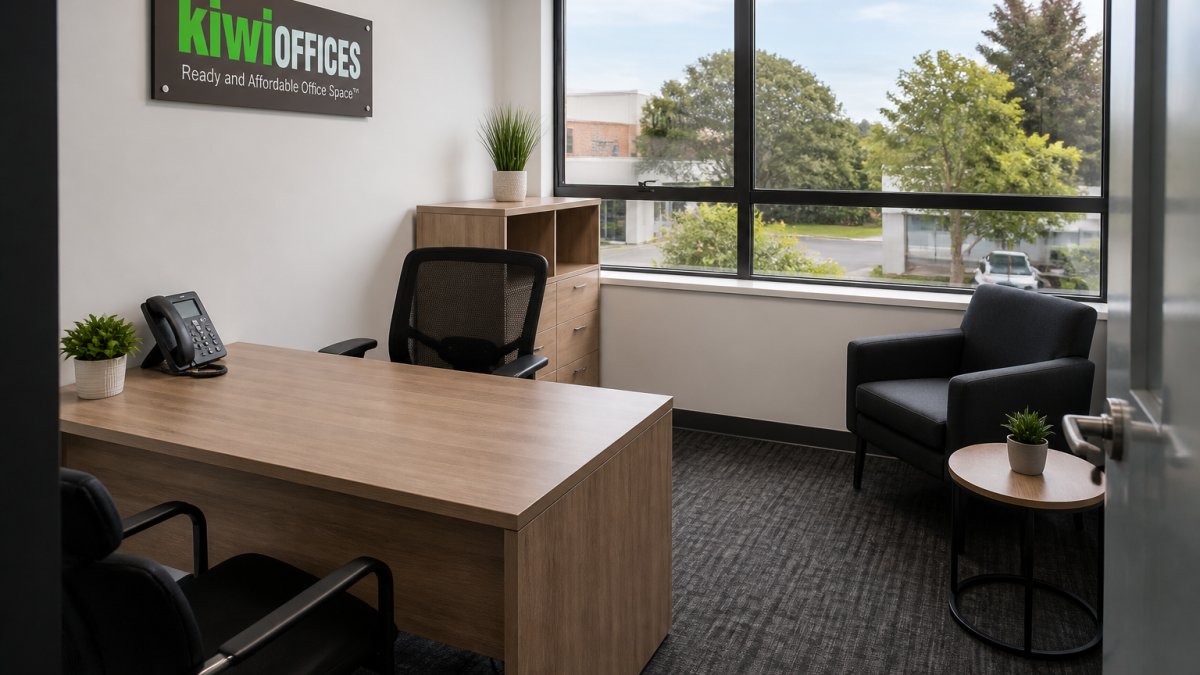
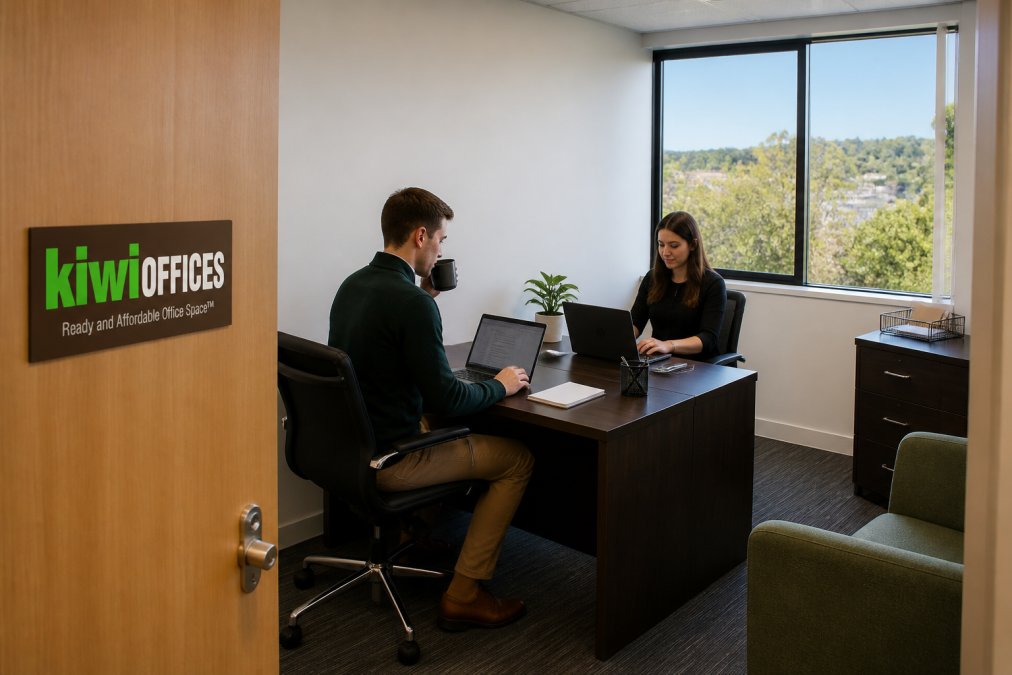
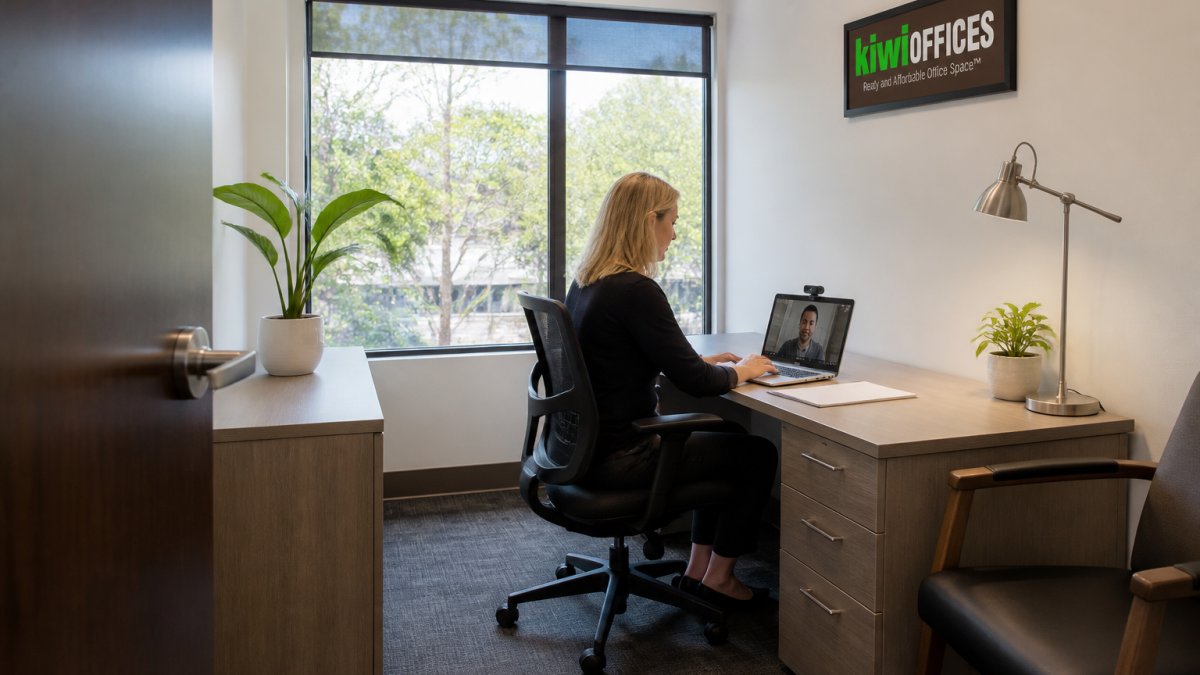
Kiwi Offices is a turnkey office provider offering private, individual business suites for small businesses, not shared desks or open coworking floors.
That distinction matters more than it sounds. A coworking membership gives you a seat in a shared environment. A Kiwi Offices suite gives you a dedicated, private room where client conversations stay confidential and your setup stays exactly as you left it.
Pros and Cons of Kiwi Offices
Pros:
- Turnkey furnished offices, ready on day one
- Private individual business suites, not shared space
- Independent office space designed for small businesses
- Suits solo consultants and small teams without a long build-out
Cons:
- Pricing depends on suite size and term, so you'll need a quote
- Location availability may vary
WeWork: Flexible Workspace With a Community Focus
WeWork is the name most consultants already know, and that familiarity cuts both ways. The network spans hundreds of buildings, offers dedicated desks, private offices, and on-demand access, and layers on community programming, networking events, member portals, and an all-access pass that lets you drop into other locations. For a consultant who wants to be around other businesses, that reach is genuinely useful.
The consultant-specific question is not whether WeWork has private offices, it does, but how those offices behave inside a building designed around shared energy. A few mechanics matter:
- Private offices sit inside a shared floorplate. You get a lockable room, but the hallway, kitchen, and phone booths are communal. Noise bleed depends on the building, not the brand, so tour the specific floor you'd occupy.
- Meeting rooms are booked separately. Most plans include a monthly allotment of meeting-room credits, and overage is billed per hour. A consultant who hosts two client meetings a week can burn through an entry-tier allotment quickly.
- The all-access pass is the real differentiator for travelers. If you work across multiple metros, a single membership that opens doors in other cities is hard to replicate with a single-location executive suite.
- Pricing is quote-based. Published rates vary by market, floor, and term, so budgeting requires a sales conversation.
Pros and Cons of WeWork
Pros:
- Large network with all-access passes for consultants who travel between markets
- Strong community programming and networking events
- Modern, amenity-rich designs and a recognizable brand for client meetings
- Range of options from hot desks to private offices under one membership
Cons:
- Private offices sit inside a busier, shared floorplate, so quiet depends on the building
- Meeting-room credits run out and overage is billed hourly
- Pricing requires contacting the sales team, which slows budgeting
- Less privacy-by-default than a dedicated executive suite provider
Industrious: Premium Design and Hospitality-Driven Service
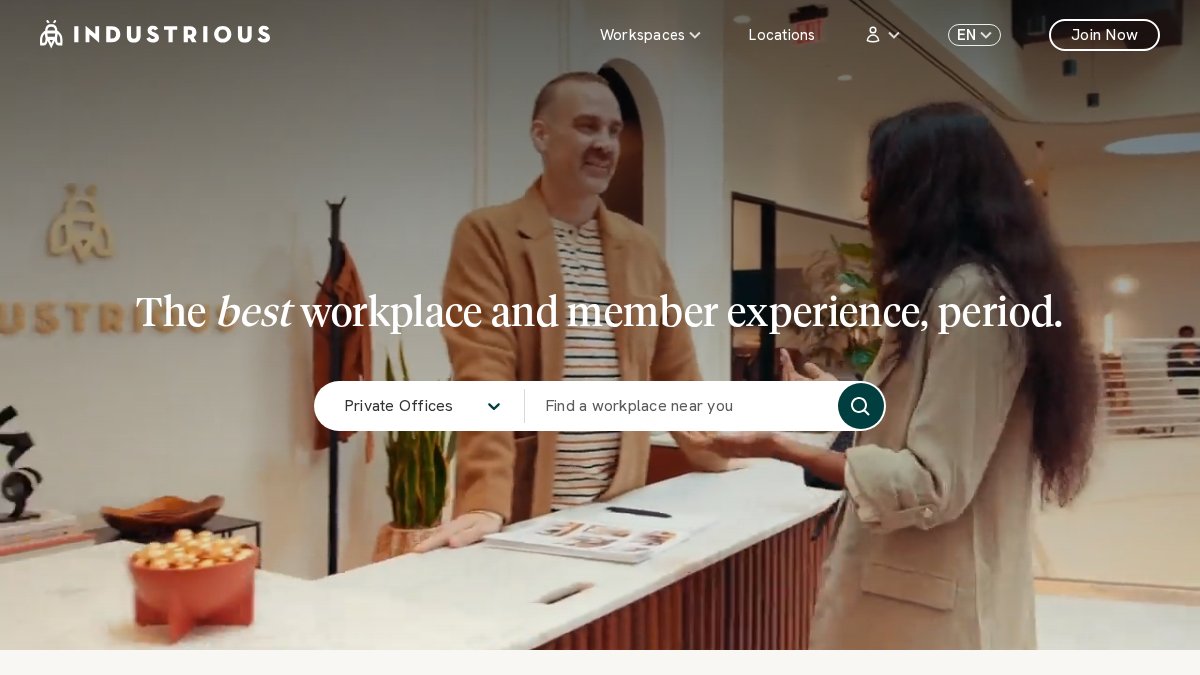
Industrious positions itself at the top of the coworking tier by selling hospitality rather than desks. The model is built around dedicated community managers, all-inclusive pricing that folds in coffee, snacks, printing, and meeting-room time, and interiors designed to look like a boutique hotel lobby. For a consultant who brings clients on site, that presentation is part of the pitch, the space does some of the credibility work for you.
What separates Industrious from a standard coworking membership is the service layer, and it's worth understanding how that layer is priced:
- All-inclusive pricing bundles the extras. Instead of metering printing, coffee, and meeting-room hours, most Industrious plans roll them into a single monthly rate. That makes budgeting predictable, but you pay for the bundle whether or not you use it.
- Community managers are staffed, not volunteer. A named manager handles guest check-in, room setup, and client greeting, a real advantage when a client arrives before you do.
- Meeting rooms are included, not metered. For consultants who host regularly, this is often the single biggest cost difference versus an à la carte coworking plan.
- Multi-city access is available on higher tiers. Consultants who travel between markets can often use other Industrious locations, though the terms vary by membership level.
The trade-off is straightforward: you're buying a premium experience and paying a premium rate. A solo consultant who rarely hosts clients on site is subsidizing amenities they won't use. A consultant whose pipeline depends on in-person meetings gets more of that spend back in client confidence.
Pros and Cons of Industrious
Pros:
- All-inclusive pricing covers printing, coffee, snacks, and meeting-room time
- Dedicated community managers handle guest check-in and room setup
- Strong aesthetics and consistent design across locations
- Multi-city access on higher membership tiers
Cons:
- Premium price point that assumes you'll use the hospitality layer
- Contact-for-pricing model makes side-by-side budgeting harder
- Less privacy-by-default than a dedicated executive suite provider
- Community programming is lighter than at community-first coworking brands
Lucid Private Offices: Privacy-First Executive Suites
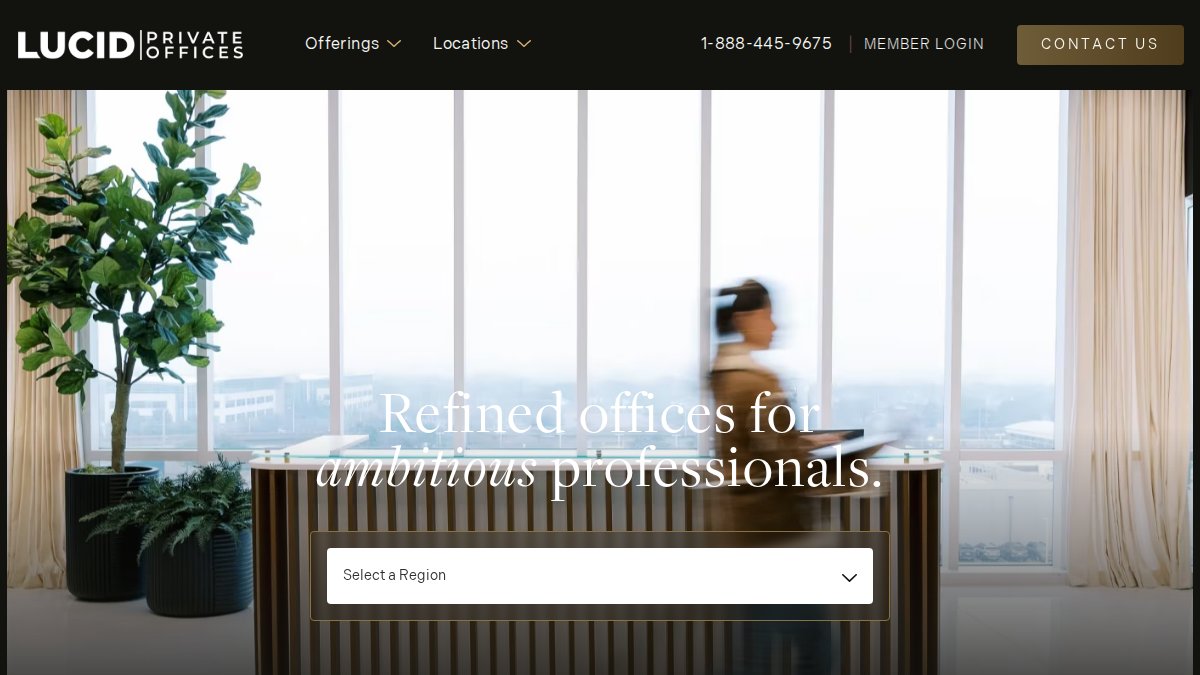
Lucid Private Offices specializes in private, secure environments with sound-dampening features, professional reception, and call answering. If your work involves sensitive information or frequent client meetings, that focus is the point.
The environment is quieter and more traditional than open coworking. The flip side: less community programming, so if networking is part of why you're leaving the home office, this won't fill that gap.
Pros and Cons of Lucid Private Offices
Pros:
- Strong emphasis on privacy and security
- Professional, distraction-free work environment
- Reception and call answering services
Cons:
- Less focus on the social and community side of coworking
- Pricing requires a direct inquiry
Coworking vs Private Office for Professionals: What Consultants Need to Know
The core difference is simple: coworking rents you access to shared space, while a private office rents you a dedicated room you control. For professionals who bill by the hour and handle confidential client information, that control is usually the deciding factor.
A few practical questions separate the two:
- Can you close a door on a client call without booking a room?
- Will your monitor, files, and whiteboard be exactly where you left them?
- Can a client walk in and see a professional, private setting?
- Does the space scale if you add a contractor or a second team member?
If the answer to any of those is no, a shared desk is costing you more than it saves.
Private Office Space for Consultants: Privacy, Tax, and Legal Considerations
Private office space for consultants carries implications beyond comfort. Two areas deserve attention before you sign anything.
Tax treatment. If you're an independent contractor, the IRS generally allows a deduction for the business use of a home office only under specific conditions, and a dedicated outside office changes that calculation. The IRS guidance on the home office deduction is the place to start.
Privacy and data security. In a shared environment, your screen, your calls, and your paperwork are exposed to whoever is nearby. If you handle client records, contracts, or health or financial information, a private, lockable suite is the safer default.
Lease flexibility. Consultants win and lose contracts unpredictably. A month-to-month or short-term agreement keeps you from being locked into space you've outgrown or no longer need.
Frequently Asked Questions
What should consultants look for in a Premier Workspaces alternative?
Focus on four things: privacy (a lockable suite, not a shared desk), total monthly cost including parking and utilities, lease flexibility (month-to-month or short-term terms), and whether the space supports client meetings. Consultants who meet clients in person should also check meeting room access, reception services, and whether the business address can be used on contracts and marketing materials.
How does coworking vs private office for professionals affect client perception?
A private office signals stability and confidentiality. When clients visit, a dedicated suite with a closed door, professional reception, and a quiet meeting room reads differently than a hot desk in an open floor plan. For consultants handling sensitive financial, legal, or HR information, a private suite also makes it easier to keep conversations and documents out of earshot of other members.
What are the turnkey office rental benefits for a small consulting practice?
Turnkey offices come furnished, wired, and ready to use, so you avoid buying desks, chairs, and internet equipment or waiting weeks for installation. You typically get utilities, Wi-Fi, and mail handling included in one monthly payment. That simplifies bookkeeping and lets you move in within days rather than signing a multi-year commercial lease and building out the space yourself.
Can a private office space for consultants accommodate a growing team?
It depends on the provider. Many private office operators offer suites sized for one to eight people, with the option to move into a larger unit as headcount grows. Before signing, ask what happens if you add two or three people, whether you can expand within the same building, and whether there are penalties for switching suite sizes mid-term.
How do I avoid hidden fees when comparing private office options?
Request a full monthly cost breakdown in writing before you commit. Ask specifically about parking, utilities, internet, printing, meeting room hours, reception services, and any setup or deposit fees. Some providers advertise a low base rate and charge separately for items that others bundle. Comparing the all-in monthly figure, not the headline rate, is the only way to see which option actually costs less.
Choosing the right workspace is a business decision, not a real estate one, and the wrong fit quietly costs you client trust and billable hours. At Kiwi Offices, we built our suites for exactly this problem: turnkey furnished offices, private individual business suites, and a professional setting that keeps your work confidential and ready to use. If you're ready to stop working around your space, book a tour and see how quickly you can move in.