 blog
blog
Private Office vs Coworking Space: 2026 Comparison
Table of Contents
- Private Office vs Coworking Space: The Quick Comparison
- The Real Cost of Private Office vs Coworking
- Small Office Space for Rent: What to Look For
- Turnkey Office Space Features That Save You Time
- Privacy, Security, and Data Compliance
- Productivity and Team Culture: What the Layout Does to Your Work
- Lease Flexibility and Transitioning Strategies
- Frequently Asked Questions
Last Updated: September 16, 2026
Private Office vs Coworking Space: The Quick Comparison
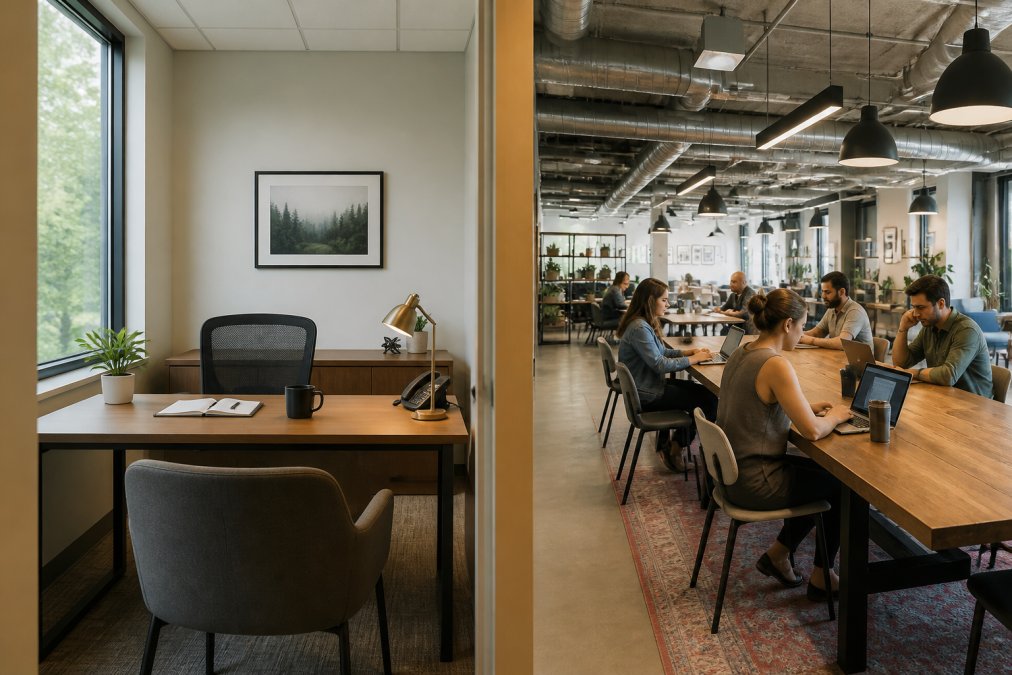
Choosing between a private office vs coworking space comes down to one question: how much control do you need over your work environment? A private office is a dedicated, lockable suite that your business controls exclusively. A coworking space is a shared environment where you rent a desk or seat alongside other companies. This comparison from Kiwi Offices breaks down cost, privacy, and flexibility so you can pick the right fit for a small team.
Comparison Table: Cost, Privacy, and Flexibility at a Glance
| Factor | Private Office | Coworking Space |
|---|---|---|
| Cost structure | Flat monthly rate for the suite | Per-desk or per-seat pricing |
| Privacy | Lockable, dedicated space | Open floor, shared areas |
| Lease commitment | Short-term to annual terms | Month-to-month memberships |
| Best for | Client-facing teams of 1-8 | Solo workers, drop-in use |
| Branding | Your name on the door | Shared identity |
| Scalability | Add suites as you grow | Add desks as you grow |
The Real Cost of Private Office vs Coworking
The sticker price is the least useful number here. What matters is total cost of ownership: rent, utilities, internet, furniture, parking, insurance, and the billable hours lost managing it all.
Building a Total Cost of Ownership Comparison
Run the same line items against both options. Pull a quote from each provider and map it:
| Line item | Coworking space | Private office |
|---|---|---|
| Base rent or membership | Per-desk or per-seat rate | Flat suite rate |
| Utilities (electric, HVAC, water) | Usually included | Sometimes included, sometimes metered |
| Business internet | Included, shared bandwidth | Included or tenant-arranged |
| Furniture and desk setup | Included | Included in turnkey, extra in raw space |
| Meeting room hours | Often capped, then billed hourly | Usually included or reserved |
| Printing, scanning, mail | Metered or per-use | Often included |
| Parking | Frequently separate | Frequently separate |
| Phone and conferencing | Add-on | Add-on or included |
| Cleaning and janitorial | Included | Included in turnkey, extra in raw space |
| Insurance (general liability, contents) | Often covered by operator | Usually tenant's responsibility |
| Security deposit | Rare | Common, often one to three months |
| Setup labor and time | None | Days to weeks in raw space |
Hidden Fees and Overhead Costs to Watch For
- Meeting room surcharges billed by the hour at coworking locations once you exceed your included allotment
- Printing and mail handling fees added to your monthly invoice, often with a per-page rate
- Parking charged separately from your desk rate, sometimes per vehicle per month
- Setup costs for furniture, internet, and phone lines in a raw commercial space
- Early termination penalties buried in long-term lease language
- Overage charges for guest passes, after-hours access, or storage beyond your plan
- Security deposits and personal guarantees that tie up cash for the length of the term
Ask for a written list of everything included before signing. A low flyer rate rarely survives the first invoice.
The Cost Nobody Puts on the Invoice
The largest line item never appears on a quote: your time. Coordinating an internet install, waiting on furniture, chasing a printer repair, or hunting for an open phone booth all consume billable hours. For a solo consultant, a few lost hours a week can outweigh the rent difference. Track your time for two weeks before deciding.
Small Office Space for Rent: What to Look For
A small office space for rent should match your headcount today with a clear path to expand later. For a team of one to eight, the practical checklist is shorter than most people expect.
- Room for a desk per person plus one meeting space
- Reliable, business-grade internet with a backup connection
- A door that closes for calls and client conversations
- Access hours that match how you actually work
- A professional address for mail and client correspondence
- Parking that doesn't require a client to circle the block
Turnkey Office Space Features That Save You Time
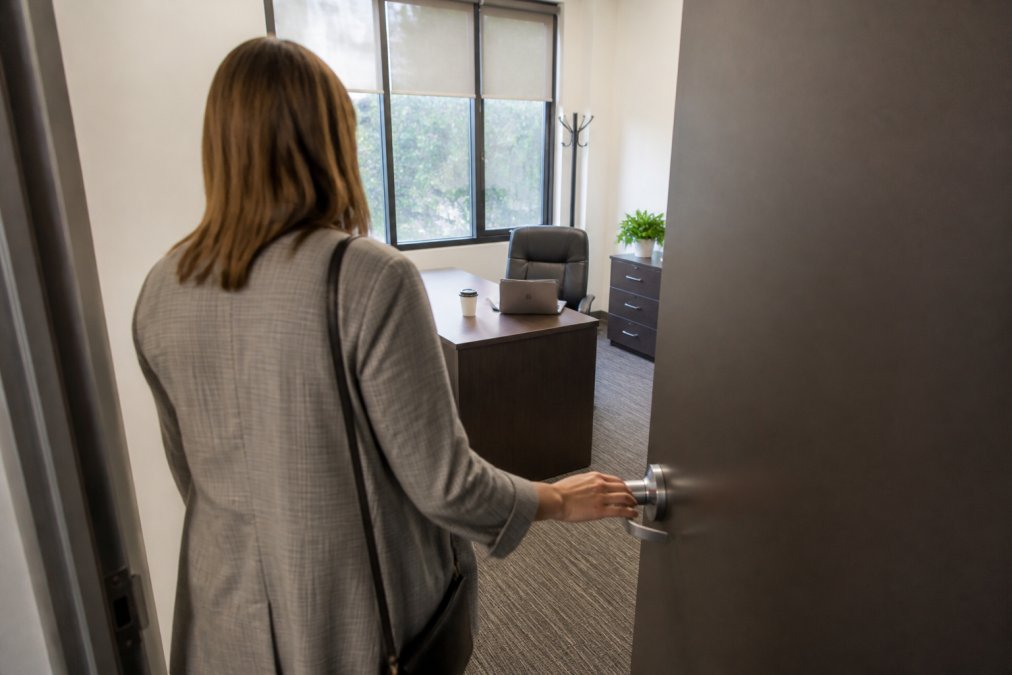
Turnkey office space is a furnished, ready-to-use suite where the infrastructure is already in place when you get the keys. You bring laptops and a coffee mug. Everything else is handled.
Privacy, Security, and Data Compliance
Privacy is where coworking's economics stop working for some businesses. Open floor plans mean shared Wi-Fi, printers, mailrooms, and conversations that carry. For regulated data, those aren't lifestyle trade-offs, they're compliance exposure.
Which Industries Feel This First
The compliance pressure is not evenly distributed. It lands hardest on:
- Healthcare and allied health, patient records and protected health information fall under HIPAA, which requires administrative, physical, and technical safeguards over where data lives and who can access it.
- Legal, attorney-client privilege and state bar rules on confidentiality make shared printers, shared networks, and open call areas difficult to defend.
- Financial services and accounting, SEC, FINRA, and state regulator expectations around books, records, and client data push toward controlled physical environments.
- Insurance and benefits, personally identifiable information and claims data create both contractual and regulatory obligations.
- Government contracting, flow-down clauses from federal contracts often specify physical access controls that a hot desk cannot satisfy.
- Any business handling payment card data, PCI DSS expectations apply to how cardholder data is stored, transmitted, and physically secured.
What a Private Office Actually Gives You
A dedicated, lockable suite changes the compliance conversation in concrete ways:
- Physical access control, a door you can lock, a suite only your team enters, and a visitor log you control.
- Network separation, your own router and SSID, not a shared network with hundreds of unknown devices.
- Dedicated printing and scanning, documents never queue on a machine another member can walk up to.
- Private call space, client conversations happen behind a closed door, not in a phone booth with a waitlist.
- Chain of custody, physical files, signed originals, and hardware stay in a space you control and can document.
- Clean desk and lockable storage, a place to secure laptops, drives, and paper records at end of day.
What Coworking Can and Cannot Do
Coworking operators have improved: many offer private lockable offices, VPN-friendly networks, and access-controlled floors, a workable middle ground for a solo practitioner who needs a door but not a full suite.
The Practical Test
Ask one question: if a client, auditor, or regulator asked where their data is stored, who can physically access it, and how you control that access, could you answer in a paragraph? If the honest answer involves 'shared' or 'mostly,' a private office isn't a preference, it's the cost of staying in your industry.
Productivity and Team Culture: What the Layout Does to Your Work
Layout shapes how your team works, psychologically as much as logistically. Open coworking environments create ambient noise, calls, conversations, foot traffic, that interrupts deep work.
Lease Flexibility and Transitioning Strategies
The lease commitment is usually the deciding factor for small businesses, and it's where the two options diverge most.
- Estimate your realistic headcount for the next 12 months, not just today
- Confirm the cancellation policy and notice period in writing
- Visit at the hours you actually work, not just at midday
- Test the internet speed yourself before signing
- Ask about expansion options within the same building
Frequently Asked Questions
What are the primary cost differences between private offices and coworking spaces?
Coworking memberships typically charge per desk or per person monthly, with shared amenities included but meeting rooms and parking often billed separately. A private office is usually priced per suite, covering the entire space regardless of how many people use it. For a team of five or more, the cost of private office vs coworking often favors the private suite because you stop paying per head. Request a quote from providers to compare total monthly outlay including utilities and parking.
How much is rent for a small office space for rent in the current market?
Rent for small office space for rent depends on location, suite size, and lease term. Monthly rates also vary based on included utilities, parking, and access to shared amenities like conference rooms. Because pricing changes with availability and buildout, the most accurate figure comes from a direct quote. Contact Kiwi Offices to discuss current availability and get a tailored price for your team size.
Does a private office offer better security for sensitive business data?
Yes, in most cases. A private office gives you a lockable door, controlled access to your suite, and a dedicated network setup that you configure yourself. Coworking spaces rely on shared Wi-Fi, open floor plans, and communal printing areas, which increases the risk of unintended exposure. If your work involves client financial records, legal documents, or healthcare data, a private suite makes it easier to meet compliance obligations and control who enters your workspace.
How quickly can I move into a turnkey office space?
Turnkey office space features include furnished desks, chairs, internet, utilities, and often signage, so move-in timelines are measured in days rather than months. Traditional commercial leases can take four to twelve weeks for negotiation, buildout, and permitting. With a turnkey provider, you tour the suite, sign an agreement, and start working once your equipment arrives. Ask about setup lead time and what is included before you commit so there are no surprises on day one.