 blog
7 Things to Know Before Choosing Regus vs Premier Workspaces
Last Updated: November 1, 2026
Quick Summary
Regus vs Premier Workspaces comes down to footprint versus simplicity: Regus operated 832 U.S. locations in 2022 while Premier Workspaces managed 87, so Regus wins on national coverage. The real deciding factor is your lease terms, so compare total 12-month cost, not base rent alone.
- Regus ran 832 locations versus Premier Workspaces' 87 in Coworking Insights' 2022 ranking.
- Compare the total 12-month cost: base rent, setup fee, deposit, meeting-room overage, and add-ons.
- Confirm whether your rate includes meeting room hours or bills them at full rack rate.
- Ask about minimum term, notice period, and early-exit fees before signing any contract.
- Book a tour to check noise levels, hallway traffic, and actual privacy in person.
Table of Contents
- Regus vs Premier Workspaces: How the Two Providers Compare
- Footprint and Location Coverage
- Workspace Formats and Amenities
- Private Office vs. Coworking Space: What You Actually Get
- Pricing and Lease Terms: Where the Real Differences Show Up
- Furnished Office Space for Small Businesses: What to Expect
- Virtual Offices, Meeting Rooms, and Business Address Services
- Questions to Ask Before Renting an Office
- Book a Tour and See a Private Suite in Person
- Frequently Asked Questions
Regus vs Premier Workspaces: How the Two Providers Compare
Regus vs Premier Workspaces is a comparison between the largest flexible office operator in the country and a smaller, service-focused provider, and the gap between them is wider than most prospects expect. According to Coworking Insights' 2022 ranking of the five largest coworking operators, Regus operated 832 locations while Premier Workspaces managed 87. That is nearly ten times the footprint. At Kiwi Offices, we watch small business owners weigh these two names constantly, and the deciding factor is rarely brand size. It is what the lease actually commits you to. Below, we break down footprint, pricing, workspace formats, and the questions to ask before signing anything.
Footprint and Location Coverage
Location coverage is where Regus wins on paper and where the comparison gets more interesting in practice. Regus describes its network as offering office space, coworking, virtual office locations, and meeting rooms across a sprawling footprint, per Regus's own service overview. Premier Workspaces lists a smaller set of locations but positions itself around flexible formats rather than sheer volume. Deciding between these expansive networks and more intimate, specialized setups requires a careful assessment of how specific flex office benefits align with your daily operational requirements.
For a solo consultant, a nearby location matters more than a national map. For a regional manager opening a satellite office, the reverse is true.
Here is the trade-off in plain terms:
| Factor | Regus | Premier Workspaces |
|---|---|---|
| U.S. locations (2022 ranking) | 832 | 87 |
| Formats offered | Coworking, private offices, virtual offices, meeting rooms | Virtual offices, meeting rooms, private offices, daily offices |
| Best for | National coverage needs | Simpler, smaller footprint |
Workspace Formats and Amenities
Choosing between flexible office providers often comes down to the details of each format.
How a format feels day to day matters. Shared office space involves sharing common areas with other tenants, which suits people who want energy and networking but can frustrate people who need quiet and privacy.
Watch out: a common mistake is booking a shared membership when what you actually need is a closed door for client calls. Read the amenity list carefully and confirm whether your rate includes meeting room hours or bills them separately.
Private Office vs. Coworking Space: What You Actually Get
The private office vs. coworking space decision is the one that shapes your daily work more than any brand choice. A coworking space gives you a seat in a shared environment with communal amenities. A private office gives you four walls, a door, and control over who hears your conversations.

For contractors and consultants who meet clients, that difference is not cosmetic. It changes how prospects perceive you. It also changes how much you get done on a focused workday.
For a deeper breakdown of what each format delivers, see our guide to private office vs coworking space.
Pricing and Lease Terms: Where the Real Differences Show Up
Pricing and lease terms are where the real differences show up, and where published numbers are hardest to find. Pricing depends on location, suite size, and contract length, so the most useful comparison is the cost mechanics you can verify in a written quote.
Here is the like-for-like framework we use when comparing any two flexible-office providers, including Regus and Premier Workspaces:
| Cost line item | What to ask | Why it matters |
|---|---|---|
| Base monthly rent | Is the quoted rate per desk, per suite, or per square foot? | Per-desk pricing hides the cost of adding a second person. |
| Setup or onboarding fee | Is there a one-time charge to activate the account? | A $0 setup fee can mask a higher first-month invoice. |
| Security deposit | How many months' rent is held, and when is it refunded? | Deposits tie up cash that a small business may need for payroll. |
| Escalation clause | Does the rate rise annually, and by what mechanism? | A 3% annual escalator on a 24-month term adds real cost. |
| Meeting room hours | Are hours included, discounted, or billed at full rack rate? | Heavy client-meeting users can outspend their rent on conference rooms. |
| Mail and phone handling | Is forwarding included or billed per item? Is call answering extra? | Virtual-office add-ons often exceed the base plan. |
| Termination and notice | What is the minimum term, notice period, and early-exit fee? | Exit terms determine your real switching cost. |
When comparing flexible office offers, read the contract line by line and ask for a sample invoice that shows every line item.
Contract flexibility deserves its own line of questioning. Ask whether you can upgrade or downgrade suites mid-term, whether renewal is automatic, and how much notice you must give to avoid a rollover. For small teams, a month-to-month or six-month term with a clear notice period is often worth a higher monthly rate than a 24-month term with a steep early-exit fee.
If flexibility matters most, our article on short term office lease advantages for small business explains what to look for before you commit.
Furnished Office Space for Small Businesses: What to Expect
Furnished office space for small businesses should mean you walk in with a laptop and start working. In practice, "furnished" covers a wide range. Some suites include desks, chairs, and internet but charge extra for phone lines or storage. Others bundle everything.
Ask specifically about:
- Desk and chair count relative to your team size
- Internet speed and whether it is shared or dedicated
- Printing, phone, and mail handling costs
- Whether you can add desks as you grow without moving suites
For a team of four to eight, confirm capacity before you sign. Growth clauses matter more than the starting rate.
Virtual Offices, Meeting Rooms, and Business Address Services
Virtual offices and business address services let you use a professional address and mail handling without renting a full suite. Both Regus and Premier Workspaces offer virtual office formats alongside meeting rooms and conference rooms, according to Premier Workspaces' service listings. The difference is in the service mechanics, not the category label.
Here is what a virtual office plan typically includes and what to verify before you buy:
- Business address eligibility. Confirm the address can be used on your website, business cards, and state business filings. Some plans restrict use to a mailing address only and prohibit listing it as your principal place of business.
- Mail handling. Ask whether mail is held for pickup, scanned, or forwarded. Forwarding is often billed per item or per shipment, and a monthly forwarding allowance may be capped.
- Call answering. Distinguish between a live receptionist who answers in your company name and a voicemail or automated attendant. Live answering may be priced per minute or per call.
- Meeting room access. Confirm how many hours are included per month, whether they roll over, and what the hourly rate is beyond the allowance. Meeting rooms are the most common upsell in a virtual-office plan.
- Registered agent service. If you need a registered agent for an LLC or corporation, confirm whether the provider offers it and whether it is included or a separate fee.
Meeting rooms and conference facilities are where virtual-office plans earn their keep for client-facing businesses. A plan with generous included hours can replace a separate conference-room booking budget. A plan with no included hours can cost more than a private office once you host a few client meetings a month.
For a full breakdown of what these services include, read our professional business address guide.
Questions to Ask Before Renting an Office
Questions to ask before renting an office should cover cost, contract, and exit, in that order. Most prospects ask about price and skip the exit terms, then regret it.
Use this checklist:
- What is the total monthly cost, including every fee?
- What is the minimum term, and what is the cancellation policy?
- Does the rate increase during the term?
- How many meeting room hours are included?
- Can I expand to a larger suite without a new contract?
- What is included in "furnished"?
- How fast can I move in?
- Can I get references from current tenants?
If you work from home and it feels fine, ask yourself whether a dedicated office changes how clients see you. For many consultants, it does.
Book a Tour and See a Private Suite in Person
Book a tour and see a private suite in person before you decide between any two providers. Photos hide noise levels, hallway traffic, and how much privacy you actually get.
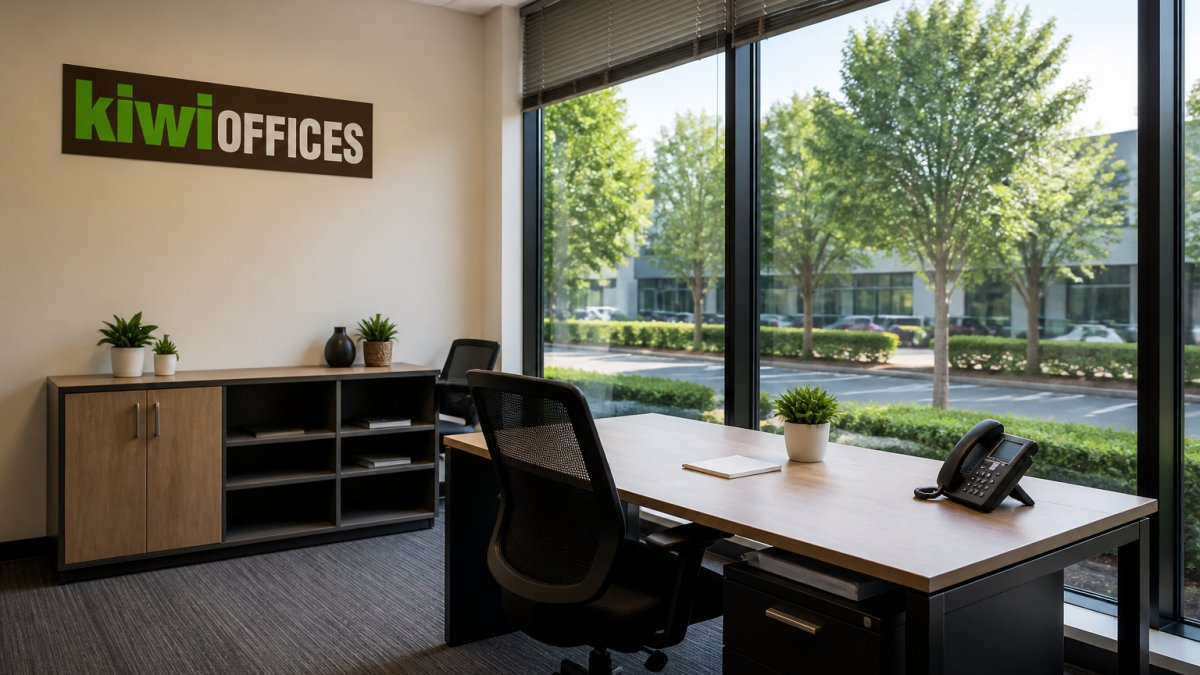
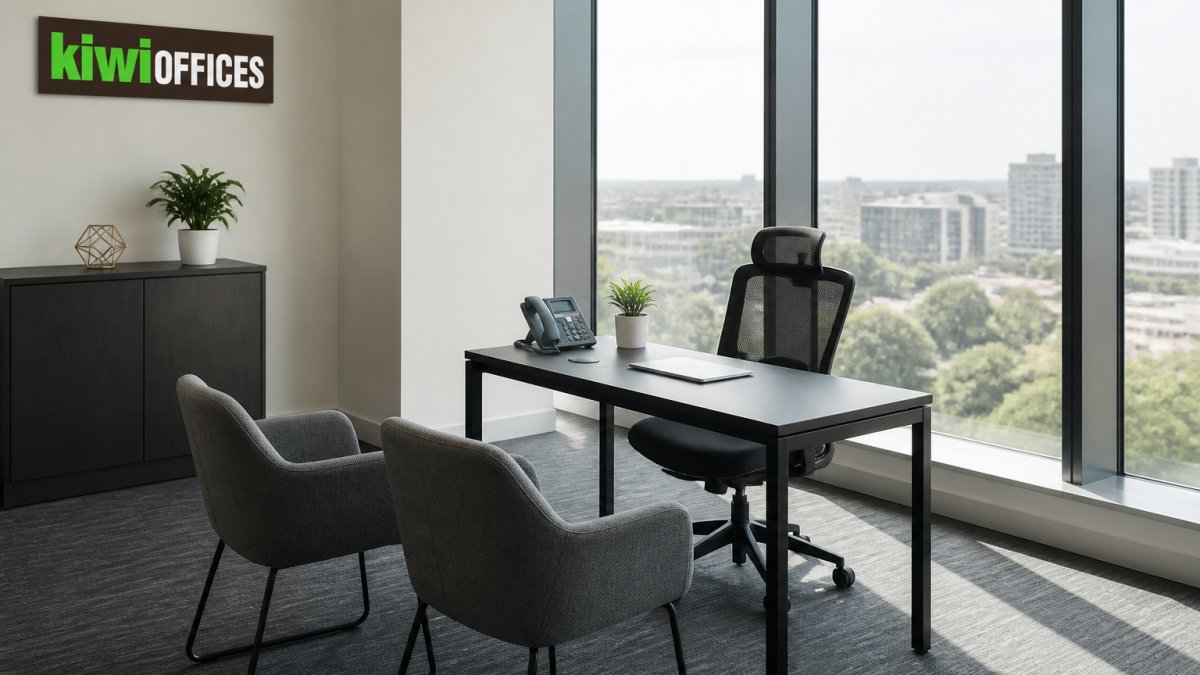
At Kiwi Offices, we offer turnkey furnished offices built as private individual business suites, not co-working or shared space. You get a ready-to-use furnished environment and independent office space designed for small businesses. That means no shared desks and no rotating neighbors.
To see what our private suites include, explore the Kiwi Offices small office offering, or reach out through our contact page to schedule a visit.
Frequently Asked Questions
What is the difference between Regus and Premier Workspaces?
The biggest difference is scale. Both providers offer flexible office formats, but their location networks differ in size. Compare the sites available near you and the formats each one lists before deciding.
Is Regus or Premier Workspaces better for a small business?
It depends on how much space you need and how long you plan to stay. Compare the formats and locations each provider offers against your team's needs. Ask both for a full monthly cost that includes parking, utilities, and mail handling before you decide.
Does Regus offer private offices as well as coworking?
If privacy is the priority, confirm that the specific location has a lockable suite available and ask what the monthly cost includes. A dedicated suite is a different product from a shared membership, and the terms and pricing reflect that.
What should I compare when choosing a furnished private office?
Compare five things: the full monthly cost including parking and utilities, the length of the commitment and the cancellation policy, whether the suite is private and lockable, what furniture and internet are included, and how quickly you can move in. Ask for the total in writing. Get every charge itemized before signing.
Choosing between two large providers comes down to reading the contract and touring the space, not comparing brochures. Get started with Kiwi Offices and book a tour to see a private, furnished suite that gives your small business the privacy and independence a shared workspace cannot.