 listicle
Best Office Space for Consultants in 2026
Table of Contents
- Quick Comparison: Best Office Space for Consultants
- 1. Kiwi Offices: Private Suites Built for Consulting
- 2. WeWork: Flexible Coworking With Global Reach
- 3. Industrious: Premium Workspace for Client Meetings
- 4. Office Evolution: Cost-Effective Private Offices
- 5. Gable and Upflex: On-Demand Workspace Networks
- 6. Professional Business Address Services for Consultants
- 7. Turnkey Furnished Office Spaces: What to Expect
- Frequently Asked Questions
Last Updated: September 27, 2026
Quick Comparison: Best Office Space for Consultants
Choosing the best office space for consultants comes down to privacy, flexibility, and how quickly you can meet a client without apologizing for the venue. This guide from Kiwi Offices compares seven options, from private suites to on-demand networks, so you can match the space to how you bill your hours.
Here's the short version before the details:
| Option | Best For | Setup Speed | Pricing Model |
|---|---|---|---|
| Kiwi Offices | Consultants wanting a private, turnkey suite | Days | Contact for pricing |
| WeWork | Collaborative, high-energy workers | Same day | Subscription, from $299/month |
| Industrious | Premium client-facing meetings | Days | Subscription, contact for pricing |
| Office Evolution | Cost-conscious private offices | Days | Subscription, contact for pricing |
| Gable and Upflex | Traveling and hybrid consultants | Same day | Pay-as-you-go or subscription |
| Virtual address services | Remote consultants needing a business address | Days | Subscription, from $149/month |
The biggest mistake consultants make is renting for square footage instead of for how they work. A consultant's day splits into three modes: deep focus work, client meetings, and admin. Most shared spaces only solve one well.
1. Kiwi Offices: Private Suites Built for Consulting
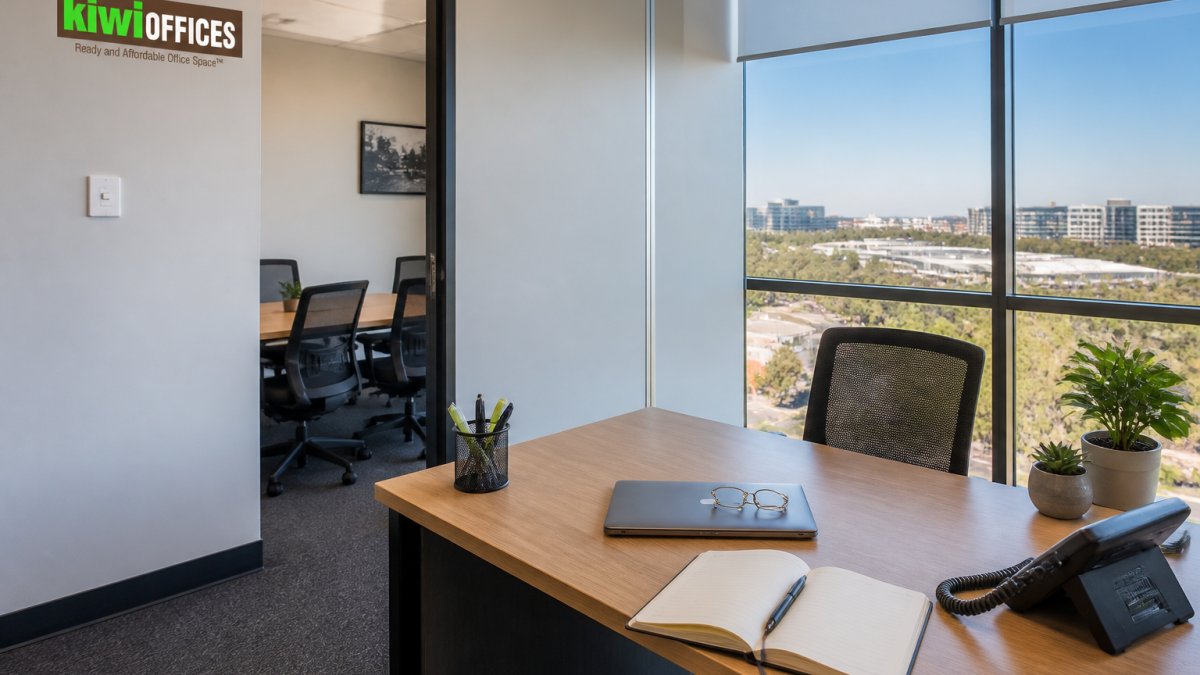
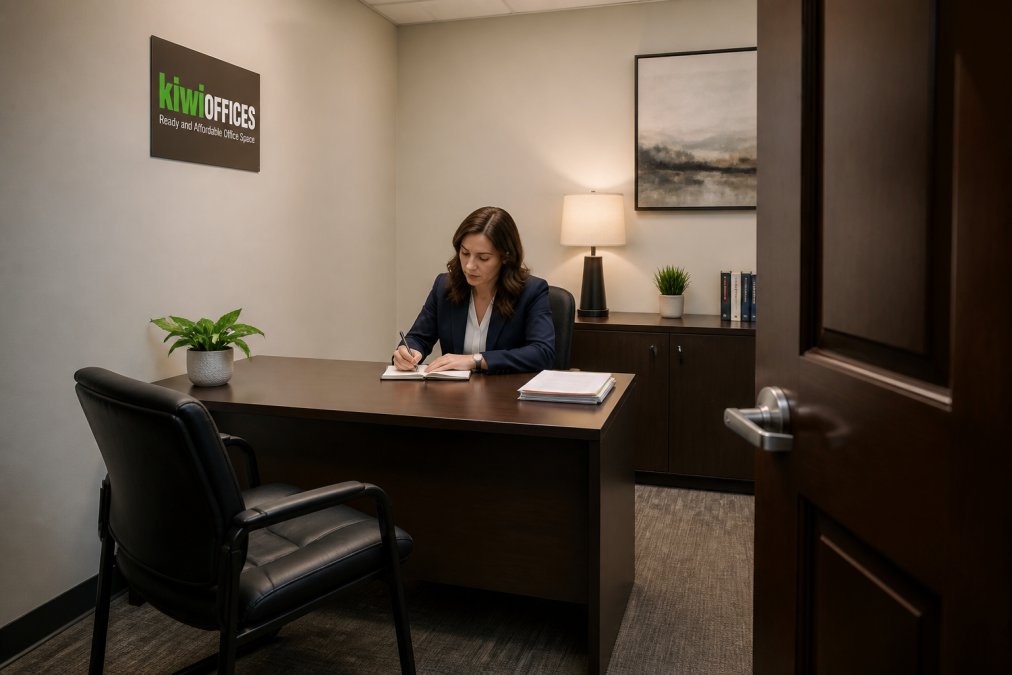
Kiwi Offices is our top pick because it solves a problem most consultants don't realize they have: shared space is not private space. Every suite is a private, individual business suite, not a desk in an open room. You get a door that closes, which matters when a client discusses something confidential.
What Makes Kiwi Offices Different
The difference is the model itself: Kiwi Offices is not co-working and not shared space, and that changes your daily experience.
- Turnkey furnished offices. You walk in with a laptop and start working. No furniture orders, no internet setup, no waiting on a build-out.
- Private individual business suites. Your space stays yours. Nothing gets double-booked, and no one takes your desk while you're at lunch.
- A professional setting built around privacy and productivity. Client conversations stay inside your four walls.
Setup typically takes days, not months, which matters if a contract starts soon and you have no tolerance for a long commercial lease negotiation. What most guides miss: the real cost of a cheap shared desk is the client meeting you couldn't take because the room was booked.
2. WeWork: Flexible Coworking With Global Reach
WeWork is a well-known name in flexible workspace, offering hot desks, dedicated desks, and private office suites with community-focused amenities. Pricing is subscription-based.
The appeal is breadth.
3. Industrious: Premium Workspace for Client Meetings
Industrious positions itself as a premium flexible workspace provider, and the difference shows in design and service. Private offices and suites come with all-inclusive amenities, daily breakfast and coffee, a dedicated community team, and enterprise-grade security.
4. Office Evolution: Cost-Effective Private Offices
Office Evolution targets consultants who want privacy without the premium price tag. The model centers on private, individual office suites, virtual office plans with mail handling, professional reception, and 24/7 access options.
5. Gable and Upflex: On-Demand Workspace Networks
Gable and Upflex take a different approach: instead of renting one space, you buy access to a network.
On-Demand vs. Dedicated: A Decision Framework for Consultants
Most guides frame this as a price question. It's actually a client-interaction question. Run your last month of work through these four tests before you choose.
- Client visit frequency. If clients come to you in person more than twice a month, a dedicated private office wins. You cannot reliably host a client in a room you booked 40 minutes earlier, and the friction of "let me find us a space" reads as improvised.
- Call confidentiality. If your calls involve financials, personnel matters, legal exposure, or anything under NDA, you need a door that closes on demand, not a booth you hope is free. On-demand networks rarely guarantee a private room at a specific hour.
- Recurring commitments. A standing Tuesday 10 a.m. client meeting is incompatible with on-demand booking. Recurring slots are the single strongest signal that you have outgrown pay-as-you-go.
- Utilization rate. Track how many days per month you actually book. A common pattern among consultants is heavy use for two months, then a quiet stretch, then a scramble. If your usage is spiky, on-demand is efficient. If it stabilizes at four or more days a month, the math usually flips toward a dedicated private office.
The Real Trade-Offs
On-demand networks win on flexibility and geographic reach. You can meet a client near their office instead of asking them to cross town, and expense everything in one place with usage analytics that make client billing cleaner.
6. Professional Business Address Services for Consultants
Professional business address services give you a credible mailing address, mail handling, and often live receptionist support without renting a full office. Davinci Virtual, for example, includes a business address in prime locations, call forwarding, and on-demand meeting room access.
7. Turnkey Furnished Office Spaces: What to Expect
Turnkey furnished office spaces are move-in ready: furniture, internet, utilities, and typically reception are handled before you arrive. You bring your laptop and client list.
The Tour Checklist Consultants Actually Need
Generic office tours focus on aesthetics. Consultants should focus on whether the space supports billable work. Verify these before signing anything:
- Internet: dedicated or shared? Ask for the measured speed during business hours, not the advertised ceiling. Shared connections degrade when the floor fills up, and a dropped client call costs more than a month of rent.
- Is there soundproofing, or just a door? Drywall and a solid door absorb normal conversation. Glass partitions and shared HVAC ducts do not. Test by standing in the suite while someone talks in the hallway.
- Utilities, parking, and cleaning: included or billed separately? Ask for the all-in monthly figure in writing, not the headline rate.
- Lease terms and cancellation policy. Month-to-month, 6-month, 12-month? What notice is required to leave, and is there a penalty?
- Expansion path. Can you add a desk or a second office without relocating if you bring on a subcontractor or a junior?
- Genuine privacy or partitioned open floor? A partitioned area on an open floor is not private for confidential calls.
- Setup timeline. How many days from signature to a working desk?
- Professional business address and mail handling. Does the address appear on your invoices and website, and who signs for packages?
- Meeting rooms: included hours or per-booking? This is the line item that surprises consultants with heavy client-meeting schedules.
- After-hours access. If you work early or late, confirm 24/7 entry is included rather than an upgrade.
Tax and Legal Treatment: What Consultants Should Confirm
Security deposits and lease structures vary widely, so confirm the specifics in writing before you commit. For guidance on what commercial lease terms typically cover, the U.S. Small Business Administration's guide to commercial leases is a useful starting point, and the IRS home office deduction guidance covers the exclusivity test in detail.
Frequently Asked Questions
Is a professional business address necessary for consultants?
A professional business address services plan gives consultants a credible location for client correspondence, contracts, and marketing materials without the cost of a full-time office. It also separates your home address from your business, which matters for privacy and for establishing a formal business presence. Many consultants pair a virtual address with on-demand meeting room access to host clients when needed.
What should I look for in a turnkey furnished office spaces agreement?
Check what is included in the monthly rate: furniture, utilities, high-speed internet, reception services, and meeting room hours. Confirm the lease term and cancellation policy, since some providers lock you in for 12 months while others offer month-to-month. Ask about parking, signage, and whether you can expand to a larger suite if your team grows. Get all fees in writing before signing.
How does a private office improve client confidentiality?
A private office with a door and soundproofing lets you discuss sensitive client information without nearby coworkers overhearing. Unlike hot-desking or open coworking areas, a dedicated suite gives you a controlled environment for phone calls, video conferences, and in-person meetings. This matters for consultants handling financial, legal, or strategic client matters where privacy is expected.
What are the tax implications of renting office space for consultants?
The IRS allows you to deduct ordinary and necessary business expenses, which generally includes office rent, utilities, and internet for a dedicated workspace. If you use a home office exclusively for business, you may qualify for the home office deduction, but renting external office space simplifies the calculation. Consult a tax professional to confirm what applies to your situation and entity structure.
How much should you pay for office space as a consultant?
Pricing depends on location, suite size, lease term, and included amenities. Virtual office plans typically cost less than private suites, while dedicated private offices sit at the higher end. Request quotes from providers and compare the total annual cost per worker, not just the monthly rate.