 comparison
Why Avoid Coworking Spaces: Drawbacks to Weigh
Table of Contents
- Why Avoid Coworking Spaces: The Drawbacks Most Members Discover Late
- Coworking Space Disadvantages That Show Up in Daily Work
- Coworking Space Privacy and Security: Client Information Risk
- The Real Cost of Coworking: What the Membership Fee Leaves Out
- Coworking vs Private Office: Which Fits Your Business Needs?
- Alternatives to Home Offices for Remote Workers Who Need Quiet
- Before You Sign: Contract, Cancellation, and Accessibility Questions
- Conclusion: Avoiding Coworking Spaces Isn't Anti-Community
- Frequently Asked Questions
Last Updated: October 12, 2026
Why Avoid Coworking Spaces: The Drawbacks Most Members Discover Late
Coworking spaces sell flexibility, community, and a professional address without a long lease. For a freelancer or small team, that pitch is genuinely appealing.
The core problem isn't that coworking is bad. It's that the model serves everyone, which means it serves no one particularly well. A hot desk has to work for a podcaster, a tax accountant, and a two-person startup sharing the same room.
The Promise vs. the Daily Reality
The pitch is a flexible desk in a lively shared workspace with networking built in. The reality is an open-plan room where someone else's sales call becomes your background noise, and where "flexible" often means you have no say over where you sit. Below, we break down the drawbacks that matter most, plus a framework for deciding between coworking, home, and a private office.
Coworking Space Disadvantages That Show Up in Daily Work
The most common coworking space disadvantages are noise, distraction, and shared-space friction. These aren't occasional annoyances. They are structural features of an open-plan workspace where dozens of people with different jobs share one room.
Noise, Distraction, and the Open-Plan Problem
Focus is the first casualty. Open-plan layouts mean every phone call, keyboard, and conversation competes for your attention.
- Client calls with background chatter and music
- No door to close when you need deep concentration
- Meeting rooms booked solid during peak hours
- Constant visual movement across the room
For work that requires sustained concentration, this environment works against you. A common mistake is assuming noise-canceling headphones solve it. They reduce sound, but they don't stop the person next to you from tapping your shoulder mid-task.

Shared-Space Friction and Etiquette Gaps
Shared-space friction builds slowly, then all at once. Members arrive with different expectations about what "shared" means.
Coworking Space Privacy and Security: Client Information Risk
Privacy and confidentiality are the hardest drawbacks to fix in a shared environment. If your work involves client information, legal matters, financial records, or health details, an open room is a genuine risk. Calls get overheard. Screens face outward. Documents sit on shared tables.
The FTC guidance on protecting personal information is clear that businesses are responsible for safeguarding the data they hold, regardless of where the work happens. Solo professionals and small firms often find that a private office is the only setup that keeps client conversations and records out of public earshot.
Where Confidentiality Actually Breaks Down
Most leaks in a shared workspace are not hacks. They are ambient exposure, the kind that happens because the room was never designed for private work:
- Shoulder-surfing and screen visibility. Open layouts put your monitor in the sightline of anyone walking behind you. A client roster, a spreadsheet of account numbers, or an open email thread is readable from several feet away.
- Overheard calls. A phone booth helps only if one is free. When booths are occupied, members take sensitive calls at their desks, and the person two tables over hears the whole thing.
- Shared Wi-Fi and devices. Public or shared networks and unattended laptops create opportunities for interception or casual access that a locked private office does not.
- Printed and physical documents. Shared printers, scanners, and mail areas leave paper, contracts, invoices, medical forms, sitting in the open.
Practical Safeguards If You Stay in a Shared Space
You can reduce exposure even without walls, though you cannot eliminate it:
- Use a privacy screen or filter on your laptop and angle it away from walkways.
- Take confidential calls only in a booth or a reserved room, never at a hot desk, and treat "no booth available" as a reason to reschedule, not to compromise.
- Connect through a trusted network or a personal hotspot rather than open shared Wi-Fi, and keep devices locked when you step away.
- Retrieve print jobs immediately and shred anything sensitive rather than leaving it in a shared bin.
- Confirm in writing how the operator handles visitor logs, mail, and after-hours access before you rely on the space for client work.
For solo professionals and small firms handling sensitive client data, a private office is usually the only setup that reliably keeps conversations, screens, and records out of public view.
The Real Cost of Coworking: What the Membership Fee Leaves Out
The membership fee is the starting point, not the total. Day passes at coworking locations have been reported in the $20 to $50 range, with a national median around $31, according to CoworkingCafe's 2026 coworking price report.
Costs that often sit outside the headline price:
- Meeting-room hours beyond a small monthly allowance
- Printing, scanning, and mail handling
- Parking or transit to a central location
- Locked storage for equipment and files
- Phone booths or quiet rooms, when available at all
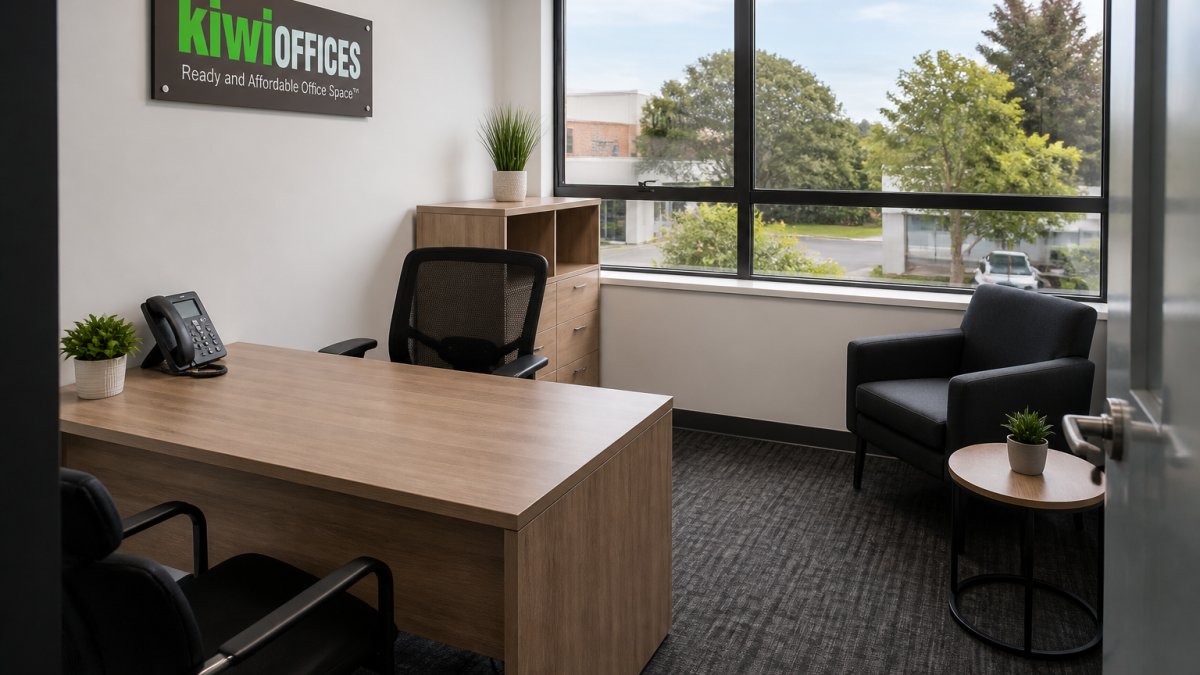
Add those up and the gap between a hot desk and a private suite narrows fast. Kiwi Offices provides turnkey furnished private suites, so the workspace, furniture, and setup are ready on day one.
Coworking vs Private Office: Which Fits Your Business Needs?
A private office is the better fit when your work depends on confidentiality, quiet, or a consistent setup. Coworking suits people who rarely take calls, need minimal space, and value being around others. The right answer depends on how you actually work, not on which option is cheapest per month.
A Decision Framework: Coworking, Home, or Private Office
Use this to match your situation to the right workspace:
| If your situation is... | Best fit | Why |
|---|---|---|
| Frequent client calls or confidential work | Private office | Door, walls, and controlled access |
| Occasional meetings, mostly solo focus work | Coworking | Low commitment, shared amenities |
| Full-time remote work with a spare room | Home office | No added cost, full control |
| Team of 1-8 needing a real address | Private office | Room to grow, professional setting |
| Need quiet but no spare room at home | Private office | Dedicated, distraction-free space |
Alternatives to Home Offices for Remote Workers Who Need Quiet
For remote workers who need quiet, the practical alternatives are a private office suite, a dedicated desk in a quieter building, or a shared office with real walls.
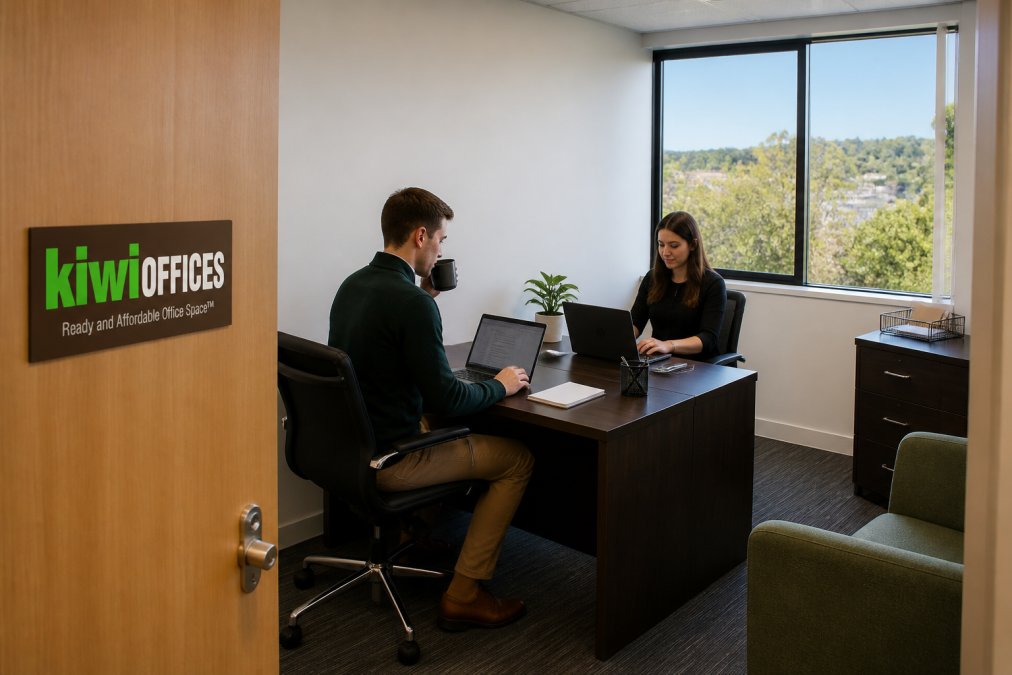
A private suite solves the noise and boundary problems at once. You get a door, a consistent setup, and a clear separation between work and home.
OSHA guidance on workplace noise and concentration notes that a work environment affects both focus and wellbeing.
Before You Sign: Contract, Cancellation, and Accessibility Questions
Most coworking drawbacks are survivable. A bad contract is not. The terms you sign determine what happens when your needs change, when the space changes, or when something breaks, and those terms are far harder to renegotiate than they are to review up front. Ask about them before you commit, and get the answers in writing rather than in a tour conversation.
Contract and Cancellation Terms That Matter
- Minimum term and flexibility. Is month-to-month genuinely available, or is it a longer commitment with a monthly billing label? A "flexible" plan with a twelve-month term is not flexible.
- Notice period and exit fees. How much notice is required to cancel, and are there penalties, forfeited deposits, or auto-renewal clauses that lock you in silently?
- What is included versus billed separately. Meeting-room hours, printing, mail handling, and storage are common add-ons. Know the allowance and the overage rate before you rely on them.
- Availability guarantees. Does the plan promise you a desk or room, or only access on a first-come basis? A membership that cannot guarantee a seat at your working hours is a risk, not a benefit.
- Service interruptions and closures. What happens to your access, and your billing, if the location closes, relocates, or reduces hours? Ask how disruptions are handled and whether fees are prorated.
Accessibility, Sensory Needs, and Neurodiversity
Accessibility is not a niche concern, and it is the question most members never think to ask until it affects them. A workspace that ignores it rules out capable people, and can leave you stuck in a space that does not work for how you focus.
Ask directly about:
- Step-free access and mobility. Entrances, restrooms, and desk areas that accommodate wheelchairs, mobility aids, and varied physical needs.
- Sensory environment. Whether quiet zones exist, how lighting and temperature are controlled, and whether there are low-stimulation areas for people who are sensitive to noise, light, or foot traffic.
- Accommodations. Whether the operator will adjust seating, provide a quieter location, or accommodate a service animal or assistive technology on request.
- Predictability. For members who rely on routine, a consistent desk and a known-quiet area can matter more than any amenity.
Settling these questions in writing before you sign turns a vague sense of unease into a clear decision, and it is the difference between a workspace that supports your business and one you spend months trying to escape.
Conclusion: Avoiding Coworking Spaces Isn't Anti-Community
Choosing to avoid coworking spaces isn't a rejection of community. It's a recognition that some work needs walls, quiet, and privacy that a shared room can't provide.
At Kiwi Offices, we built our spaces for exactly that gap: turnkey furnished offices, private individual business suites, and a setup that is ready to use rather than shared. Book a tour and see whether a private suite fits how you actually work.
Frequently Asked Questions
Are coworking spaces noisy and distracting?
Often, yes. Open-plan layouts and shared tables mean phone calls, conversations, and foot traffic happen near your desk all day. If your work requires deep concentration, client calls, or confidential discussions, that background noise can slow you down. Many coworking spaces offer phone booths or meeting rooms, but those are shared and often need booking, so quiet time is never fully guaranteed.
Are coworking spaces secure enough for confidential client work?
Coworking space privacy and security vary widely. Shared areas mean screens may be visible, and lockable storage or private rooms are not always standard. If you handle client information, tax documents, or legal files, confirm whether the space offers lockable storage, private rooms, and a written data-handling policy. A private office suite gives you a controlled space where client conversations and documents stay behind a closed door.
Do coworking spaces cost more than working from home?
Usually, yes. A 2026 coworking price report from CoworkingCafe lists day passes from $20 to $50, with a $31 national median, and monthly memberships cost more. Beyond the fee, budget for parking, coffee, printing, and meeting-room overages. Working from home costs less up front, but many remote workers find that client meetings, quiet, and a professional address are worth paying for. Pricing for private suites depends on size and term, so ask for a current quote.
Is a private office better than a coworking space for a small business?
It depends on your work. Coworking suits people who rarely take calls and value constant networking. A private office fits businesses that meet clients, handle confidential information, or need a quiet, consistent setup for a team. In a coworking vs private office comparison, the deciding factors are usually privacy, noise, control over the environment, and whether your team can grow without moving. Tour both and test a full workday before committing.