 comparison
Top-Rated Flexible Office Space Companies for Small Teams in 2026
Last Updated: November 8, 2026
Quick Summary
Top-rated flexible office space companies for small teams seeking privacy in 2026 are judged on whether the workspace is genuinely private, meaning an enclosed, lockable suite dedicated to one team. Kiwi Offices builds turnkey furnished private suites for teams of 1-8, while WeWork, Industrious, and Venture X mix private offices with shared space. Verify enclosure, access control, and all-in monthly cost in writing before signing.
- A private office is an enclosed, lockable suite used by one team; coworking is shared space.
- Ask whether the suite has a lockable door and solid or acoustic glass.
- Confirm the suite's maximum occupancy and the availability of the next size up.
- Request a written all-in monthly figure covering rent, utilities, internet, printing, and meeting rooms.
- Kiwi Offices provides turnkey furnished private suites, not coworking or shared space.
Table of Contents
- Private Office vs Coworking Space: Which Fits a Small Team?
- How the Leading Flexible Office Space Providers Compare
- Flexible Office Lease Terms: Short-Term, Monthly, and Growth Options
- Office Space Amenities for Small Businesses: What Should Be Included
- Furnished Private Office Rental: Move-In Ready vs Build-Out
- Transparent Pricing for Small Teams: What to Ask Before You Commit
- Book a Tour of a Private Suite for Your Small Team
- Frequently Asked Questions
Private Office vs Coworking Space: Which Fits a Small Team?
Top-rated flexible office space companies for small teams seeking privacy in 2026 are judged on one thing: whether the workspace is genuinely private.
That trade-off matters more as teams grow. A two-person consultancy can take calls from a kitchen table. A five-person firm meeting clients weekly cannot.
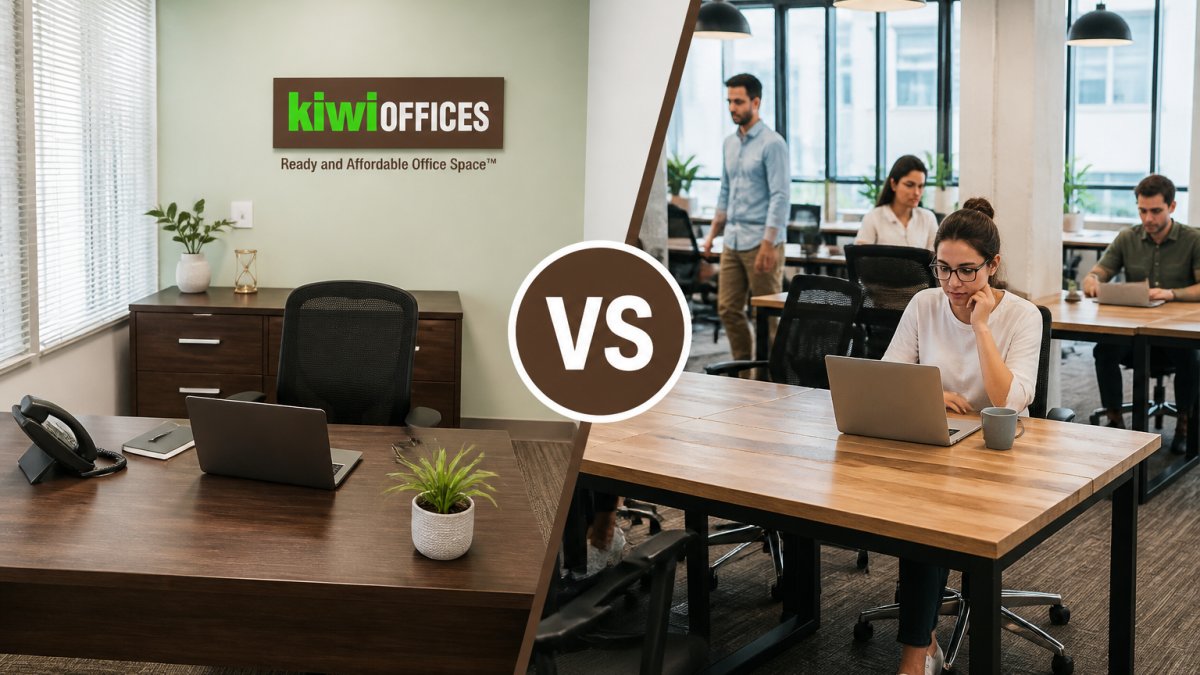
Private office means a dedicated, enclosed workspace with a door, assigned to your team and no one else.
Coworking space means shared open seating or hot desks where you take whatever is free that day.
The practical differences fall into four areas:
- Privacy: enclosed suites keep calls and documents inside; open floors do not
- Cost model: private suites usually carry a higher monthly rate than a single coworking desk
- Flexibility: coworking wins on day-to-day desk choice; private offices win on consistency
- Setup: furnished private suites are ready on day one; coworking often means hot-desking
For a team of four to eight handling confidential client work, the private suite is usually the better fit. For a solo operator who needs a desk twice a week, coworking can be enough. Our comparison of private office versus coworking space breaks down the decision point by point.
Privacy and Confidentiality: What to Verify Before You Sign
Ask three questions before signing anything. Can you close a door during a client call? Can visitors reach your suite without walking through another company's workspace? Who else holds keys or access cards to your floor?
A common mistake is assuming "private office" means fully enclosed. Some providers sell small glass-walled rooms opening onto a shared corridor with no acoustic separation. Sit inside one during a busy hour and listen.
Verify these specifics in writing:
- Whether the suite has a lockable door and solid or acoustic glass
- Whether client meetings happen in your suite or a bookable conference room
- How visitor check-in and reception handling work
- What the provider's policy is on recording, filming, and signage
Confidentiality is not a feature you can add later. It is either in the floor plan or it is not.
How the Leading Flexible Office Space Providers Compare
For a small team that needs privacy, the deciding factors are contract structure, enclosure and acoustic treatment, access control, and all-in monthly cost once fees and add-ons are counted. For a curated list of the best private office options for small teams, see our best private office picks for small teams.
| Provider | Workspace Type | Privacy Profile | Published Pricing Model | Best For |
|---|---|---|---|---|
| Kiwi Offices | Private furnished suites | Enclosed, lockable, dedicated to one team | Quote based on suite size, team count, and term | Teams of 1-8 that need a door and a dedicated address |
| WeWork | Private offices plus shared desks and hourly/daily workspace | Mixed; enclosure and acoustics vary by building and office tier | Membership tiers and office quotes; hourly and daily desk options published for shared workspace | Teams testing a location before committing, or mixing private and shared use |
| Industrious | Private offices plus shared membership | Enclosed offices available; shared areas are open-plan | Membership and office quotes | Teams comparing broad coverage across markets |
| Venture X | Private offices plus coworking | Varies by membership tier and location | Membership and office quotes | Teams prioritizing scalability and a franchise-style local operator |
How to read the privacy column. "Enclosed" means walls, a ceiling, and a door your team can close. "Lockable" means your team controls the key or access credential.
How to read the pricing column. Pricing depends on suite size, team count, and term, so treat any published number as a starting point rather than a quote.
Verify the specific building you would occupy, since acoustics, corridor layout, and access control can vary by location.
Flexible Office Lease Terms: Short-Term, Monthly, and Growth Options
Lease structure decides how much risk you carry.
Short-term agreements suit project work, seasonal teams, or a company testing a market. Monthly memberships give you a predictable exit.
A low monthly headline on a longer term can cost more than a higher monthly rate you can leave on short notice, once you account for a team that shrinks or relocates mid-term.
Ask each provider these questions before signing:
- What notice period applies to cancellation?
- Is there a minimum term, and what happens at renewal?
- Are there setup, deposit, or restoration fees?
- Can the suite be reassigned if your team outgrows it?
Our breakdown of short term office lease advantages for small business covers how these structures play out over a full year.
Capacity and Expansion: Can Your Suite Grow With Your Team?
Capacity is the question small teams underweight most. A suite that fits four comfortably feels tight at six, and moving mid-lease is expensive in time and disruption.
Ask what the provider's expansion path looks like. Can you add a desk inside your current suite? Is there a larger suite on the same floor? Does moving require a new agreement and deposit?
A four-person team should confirm two things in writing: the maximum occupancy of the current suite, and the availability of the next size up.
Office Space Amenities for Small Businesses: What Should Be Included
Office space amenities for small businesses should cover the basics that keep a team working without extra vendors. Alongside these shared essentials, choosing practical desks can help small teams make the most of their workspace, with Office Furniture Warehouse as a useful next stop.
Parking, storage, after-hours access, and conference room hours are sometimes billed separately or capped, line items that can raise a quoted monthly rate.
Build a short checklist and confirm each item in writing:
- High-speed internet included, with the speed stated
- Desks, chairs, and storage included in the rate
- Printing and copying allowance stated
- Meeting room hours included per month
- Reception and visitor handling included
- Utilities, cleaning, and climate control included
- Parking and after-hours access terms confirmed
- Business address use for mail and listings confirmed
Anything not on that list should be treated as an add-on until the provider says otherwise.
Furnished Private Office Rental: Move-In Ready vs Build-Out
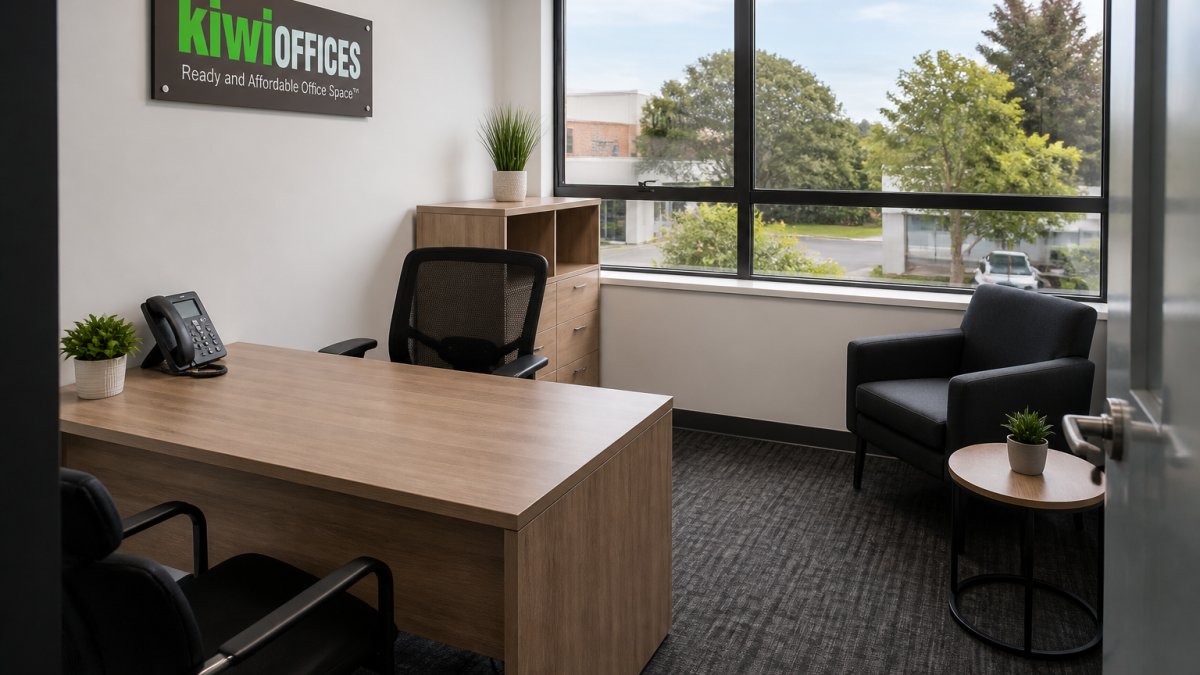
Furnished private office rental comes in two forms. A move-in ready suite arrives with desks, chairs, connectivity, and climate control already in place, so a team can work the day it signs. A build-out means leasing raw or shell space and fitting it out yourself, which takes months and capital.

For many small teams, move-in ready can offer faster setup.
A furnished suite limits how you arrange the space, which may be a fair exchange for a team that needs to be operational quickly.
Transparent Pricing for Small Teams: What to Ask Before You Commit
Transparent pricing can be hard to get from workspace providers, since some quote a base rate and bill the rest separately.
The cost anatomy of a small-team private suite. A quoted monthly rate typically covers some of the following and excludes others. Ask the provider to mark each line as included, capped, or billed separately:
- Base rent for the suite, priced by suite size and occupancy
- Utilities (electricity, heating and cooling, water)
- High-speed internet, with the included speed stated
- Furniture: desks, chairs, storage
- Printing and copying, usually a monthly allowance with overage
- Meeting-room hours per month, and the hourly rate beyond the allowance
- Reception and visitor handling
- Cleaning and maintenance
- Parking, if available
- After-hours access, sometimes a separate credential or fee
- Business address use for mail and listings
- Setup fee, deposit, and restoration or exit fee
Fees at signing and at exit. The line items that most often surprise small teams are not rent.
How term length moves the number. A longer commitment usually lowers the monthly rate in exchange for a fixed term, which only pays off if headcount is stable.
A like-for-like worksheet. Build a single row per provider with these columns, and fill every cell before comparing:
- Suite size and maximum occupancy
- All-in monthly total (sum of every included and capped line above)
- Deposit amount and refundability
- Setup, restoration, and exit fees
- Minimum term and notice period
- Meeting-room hours included and overage rate
- Printing allowance and overage rate
- Parking and after-hours access cost
- Renewal rate change, if stated
Two quotes that look similar on the headline rate often diverge by hundreds of dollars a month once deposit, meeting-room overage, and parking are counted. The worksheet makes that visible before you sign.
What to do when a provider won't quote in writing. Some providers will only quote after a tour or a call.
Pricing depends on suite size, team count, term length, and location, so no provider can give you a firm number without those details. Our guide to what private business suites cost per month explains which inputs move the figure and how to budget for them.
Book a Tour of a Private Suite for Your Small Team
A tour answers questions a rate sheet cannot. You can hear the noise level in the corridor, test whether a call carries through the wall, and see how much space four desks actually take up.
Bring your team's real requirements to the tour: headcount, how often you host clients, and how many calls happen simultaneously.
Kiwi Offices provides turnkey furnished offices built as private individual business suites, not coworking or shared space. You can review our small office space with shared conference rooms and free internet to see what is included before you visit.
If your team is weighing a move from a home office or a shared desk, the deciding factor is usually privacy, not price.
Frequently Asked Questions
What is the difference between a private office and a coworking space?
A private office is a dedicated, enclosed suite that your team controls, with a door that closes for confidential calls and focused work. A coworking space is a shared environment where you rent a desk or hot desk and share common areas with other companies. For small teams that handle sensitive client information or need quiet, a private office removes the distractions and privacy gaps of shared seating. Kiwi Offices offers private individual business suites, not coworking or shared space.
Can small teams rent a private office on a flexible lease?
Yes. Many flexible office space providers offer short-term and monthly agreements instead of multi-year commercial leases. Ask for the notice period, renewal terms, and any early-termination fees in writing before you sign. A flexible office lease should let you scale up or step away without being locked into a long commitment. Confirm whether the rate includes utilities, internet, and furnishings so you can compare total monthly cost, not just the base rent.
What amenities are typically included in a flexible private office?
Ask each provider for a written list of what is included, since inclusions vary. Parking, additional meeting-room hours, and after-hours access may cost extra. Before you commit, ask for a written list of what is included and what costs extra. For small businesses, the value of office space amenities comes down to whether they replace costs you would otherwise pay separately, such as a business address, internet, and conference room rental.
How can a small team compare office privacy and access before signing a lease?
Tour the actual suite, not just the lobby. Ask whether the office has a lockable door and how it handles confidential calls. Ask about after-hours access, visitor policies, and how deliveries reach your suite. Compare at least two providers on the same criteria: privacy, lease flexibility, included amenities, and total monthly cost. Request a written quote that lists every fee so you can compare like for like before you sign.