 comparison
Are Private Offices Better Than Coworking for Your Business?
Last Updated: November 1, 2026
Quick Summary
The private office vs coworking decision comes down to four things: privacy, contract terms, monthly cost, and how fast you can move in. If you want a door you can close, a desk that stays yours, and a space where clients never see your neighbor's whiteboard, a private office suite is the better fit.
- A private office is a dedicated, lockable suite your business occupies exclusively; coworking desks are shared and booked or claimed daily.
- A virtual office gives you an address and mail handling but not a workspace you occupy every day.
- Build a total monthly cost that includes setup fees, deposits, utilities, meeting-room overage, mail handling, and parking.
- Get minimum term, notice period, renewal rules, and early termination fees in writing before you commit.
- Count how often you meet clients in person and need quiet work; high on both points favors a private suite.
Table of Contents
- Why Business Owners Look for an Axe Offices Alternative
- Private Office vs Coworking: What Actually Changes Day to Day
- Virtual Office vs Private Office: Which Address Do You Need?
- Private Office Space for Small Businesses: What to Expect
- Alternatives to Working from Home That Hold Up Under Scrutiny
- Comparing Providers: Features, Pricing, and Contract Terms
- Book a Tour and See the Difference for Yourself
- Frequently Asked Questions
Why Business Owners Look for an Axe Offices Alternative
Searching for an Axe Offices alternative usually starts with a practical problem, not a philosophical one. A business owner needs a private office, compares a few providers, and wants to know what each one actually includes before signing anything.
Here is the honest answer up front. If you want a door you can close, a desk that stays yours, and a space where clients never see your neighbor's whiteboard, a private office suite is the better fit.
The private office vs coworking decision comes down to four things: privacy, contract terms, monthly cost, and how fast you can move in. Below, we break down each one so you can compare providers on equal footing rather than on marketing copy.
Private Office vs Coworking: What Actually Changes Day to Day
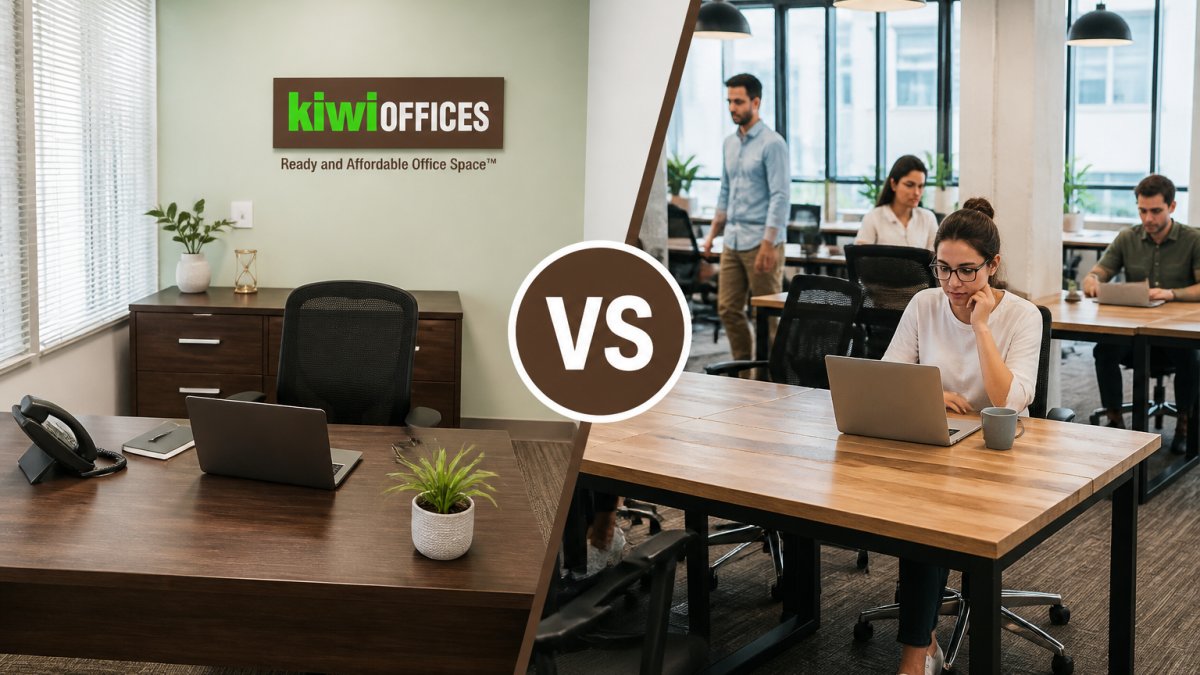
The real difference between a private office and a coworking desk is control over your environment. A private office is a dedicated, lockable suite that your business occupies exclusively. Coworking is a shared workspace where desks, rooms, and sometimes phone booths are booked or claimed by whoever is there that day.

Day to day, that changes more than you'd expect:
- Client meetings. In a private suite, clients walk into your office, not a communal lounge. No waiting for a conference room to free up.
- Confidentiality. Contracts, medical files, financial documents, and screens stay behind a closed door.
- Focus. Shared office space means shared noise. Private offices absorb interruptions.
- Setup time. Coworking often means booking desks each morning. A private suite is ready when you arrive.
If you want the full side-by-side breakdown, our private office vs coworking comparison walks through the trade-offs in more detail.
Virtual Office vs Private Office: Which Address Do You Need?
A virtual office gives you a professional business address and mail handling without a workspace you occupy. A private office gives you the address plus a physical suite you and your team work from every day. The distinction matters most for solo professionals and start-ups deciding whether they need a place to work or just a credible front.
Most generic listings stop there. The details that actually determine whether a virtual office replaces what you had at Axe Offices are the service terms behind the address:
- Address eligibility. Confirm whether the address can be used for business registration, on your website, and on business cards.
- Mail handling. Ask whether mail is received and held for pickup, scanned and emailed, or forwarded. Confirm the per-piece or per-forwarding cost if it is not included in the monthly plan.
- Call answering. A virtual plan may include a phone number and receptionist-style call answering, or it may not. Confirm whether calls are answered in your business name and how messages are delivered.
- Meeting-room access. This is the most common surprise. A virtual address often does not include meeting space, or includes a small number of hours per month with an hourly overage rate. If clients visit you, confirm the meeting-room allowance before you pay.
When a virtual office is the right replacement
If your work is entirely remote, you rarely or never meet clients in person, and you need a professional address and reliable mail handling, a virtual office covers that at a fraction of private-office rent.
When it is not
If clients visit you, if you need a quiet place to work, or if you want staff on site, a virtual address will not solve the problem. Mail forwarding does not give you a conference room, and a receptionist answering calls does not give your team desks. Stepping away from the rigid constraints of traditional commercial office layouts allows businesses to balance the necessity of a physical headquarters with the flexibility required by modern operations.
Our guide to professional business address services explains what a virtual address covers and where it stops.
Private Office Space for Small Businesses: What to Expect
For a team of one to eight people, a turnkey private office suite is usually the simplest path to a professional workspace. Turnkey means the space arrives furnished and ready to use.
What to check before you commit:
- Capacity. Ask how many people the suite seats comfortably, and whether you can move to a larger unit if you grow.
- Included services. Confirm whether phone, internet, and utilities are in the lease or billed separately.
- Meeting rooms. Find out how conference room hours are allocated and what overage costs.
- Move-in timeline. Ask how quickly a suite can be operational.
A small business owner renting an office suite is buying predictability more than square footage. The value is in walking in Monday morning and starting work, not in assembling furniture.
Our small business office suite rental guide covers what the process involves from tour to move-in.
Alternatives to Working from Home That Hold Up Under Scrutiny
Working from home works until it doesn't. The spare bedroom is fine for a solo consultant with no client visits and no staff.
Realistic alternatives to working from home fall into three categories:
- Coworking memberships. Flexible and social, but shared. Best for freelancers who rarely meet clients.
- Virtual offices. An address and mail handling. Best for remote-only businesses that need a professional front.
- Private office suites. A dedicated, furnished space for your team. Best for businesses that host clients and need privacy.
The honest test: count how often you meet clients in person and how often you need quiet, uninterrupted work. High on both points, and a private suite is the answer. Low on both, and a home office or coworking membership is a reasonable choice.
Comparing Providers: Features, Pricing, and Contract Terms
Most "alternative" pages stop at a feature grid. That is not enough to make a switching decision. To compare an Axe Offices alternative fairly, you need to map what you currently get from Axe Offices, or what you need from a replacement, onto each candidate provider, then price the whole package rather than the headline monthly rate.
Start by writing down the four things you are actually replacing:
- The workspace itself. A private suite, a dedicated desk, or a shared coworking seat. Confirm the alternative offers the same category, not a downgrade dressed up as flexibility.
- The address and mail. Whether the business address is used for registration, client correspondence, or both, and how mail is received, held, and forwarded.
- Meeting-room access. How many hours per month you actually use, and what overage costs when you exceed them.
- Contract terms. Minimum term, notice period, renewal rules, and whether you can upgrade or downgrade without penalty.
Build a like-for-like monthly cost
Headline rent is the least useful number on the page. Build a total monthly cost instead:
| Cost line | What to confirm in writing |
|---|---|
| Base monthly fee | What suite size or desk count it covers |
| Setup or onboarding fee | One-time charge, if any, and what it includes |
| Security deposit | Amount, refund conditions, and timing |
| Utilities and internet | Bundled or metered; ask for a typical monthly figure |
| Meeting-room hours | Included hours per month and the overage rate per hour |
| Mail handling | Included, or billed per piece / per forwarding event |
| Parking and access | Included, validated, or paid separately |
| Furniture | Furnished, or a separate furniture rental line |
A common pattern is a lower base rate paired with metered meeting rooms and paid parking that pushes the real monthly cost above a higher, all-inclusive quote. Ask every provider for a written quote that lists each line above, then compare the totals, not the base rates.
Contract flexibility is worth real money
When comparing alternatives, get these terms in writing:
- Minimum term. Month-to-month, six months, twelve months, or longer.
- Notice period. How many days' notice before the next billing cycle.
- Renewal rules. Automatic renewal, and how to opt out.
- Upgrade and downgrade. Whether you can move to a larger or smaller suite mid-term, and at what cost.
Map the alternative to your Axe Offices use case
Before you tour, list which Axe Offices services and locations you actually rely on, the workspace type, the address, the meeting rooms, and the contract length. Then check each candidate against that list. An alternative that matches on price but drops the meeting-room hours or the mail forwarding is not a like-for-like replacement; it is a different product.
Our dedicated office space pricing guide explains how to read provider quotes line by line.
U.S. Small Business Administration guidance on choosing and leasing business space
Book a Tour and See the Difference for Yourself
A tour settles in twenty minutes what a dozen comparison articles cannot.
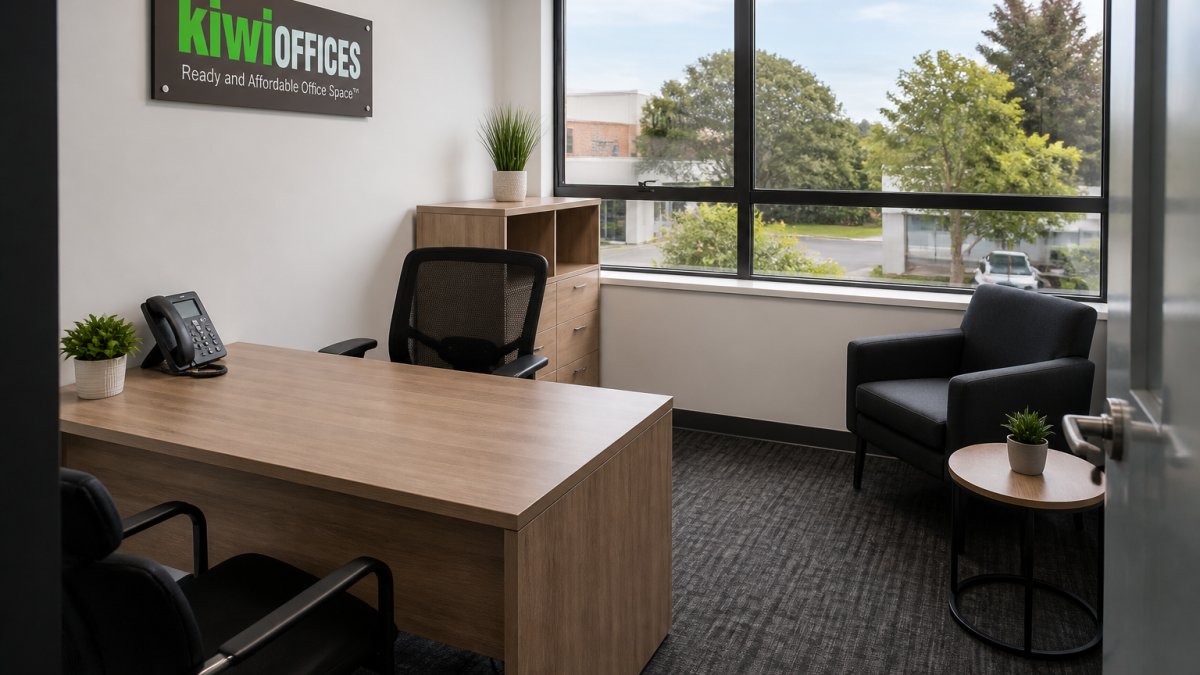
Kiwi Offices provides turnkey furnished offices built for small businesses, with private individual suites rather than shared coworking desks.
Cushman & Wakefield 2026 office use survey on how businesses are using office space
See the actual suites and shared conference rooms for yourself: explore the Kiwi Offices private office offering and book a tour.
Frequently Asked Questions
What are the best alternatives to Axe Offices?
Alternatives fall into three groups: private office suites like Kiwi Offices, coworking chains such as WeWork or Regus, and virtual office services like OSI Offices or Venture X. Each serves a different need. Coworking offers shared amenities and short commitments, while private suites give you a locked, furnished space of your own. Virtual offices provide a business address and mail handling without a dedicated desk. Compare what is included, the lease terms, and whether you need privacy for client meetings before choosing.
How does a private office compare with coworking?
The core difference is control over your space. A private office gives you a locked suite, a quiet environment, and the ability to leave materials out without packing up. Coworking means shared desks, common areas, and often background noise. Coworking can cost less month to month, but private offices suit businesses that meet clients on site or handle confidential work. If you have ever cut a call short because of noise, a private office solves that problem directly.
What is the difference between a private office and a virtual office?
A virtual office gives you a professional mailing address and mail handling, sometimes with meeting room credits, but no dedicated desk. A private office includes an actual furnished workspace you can use every day. Pricing depends on the services included and the terms you choose. If you need a place to work and meet clients, a virtual office alone will not cover it.
Is a private office worth it for a small business?
It depends on how often you meet clients and how much privacy your work requires. A private office pays off when you need a consistent, professional setting for meetings, handle sensitive information, or want to separate work from home life. For a team of one to eight, a furnished suite removes setup costs and gives you room to grow. Ask providers about expansion options before signing so you are not forced to move when you add staff.
Can I rent a furnished office without sharing the workspace?
Yes. Providers such as Kiwi Offices offer fully furnished, private suites that are not coworking or shared space. You get your own locked office with desks and chairs already in place, so you can move in without buying furniture. Confirm what the lease includes, such as phone, internet, and utilities, and ask about cancellation terms.
The workspace decision gets easier once you stop comparing marketing pages and start comparing what's included. If you need a private, furnished office where clients meet you behind a closed door and your team walks in ready to work, Kiwi Offices is built for exactly that. Turnkey furnished suites, private individual business space, and a furnished environment ready from day one. Get started with Kiwi Offices and book a tour to see the difference for yourself.