 how-to
How to Transition from Home Office to a Private Workspace
Table of Contents
- Step 1: Run a Logistics Checklist Before You Move
- Step 2: Choose the Right Professional Space for Your Business
- Step 3: How to Improve Focus Working in a New Environment
- Step 4: Set Professional Boundaries and Availability Expectations
- Step 5: Manage Work-Life Balance and Commute Management
- Step 6: The Benefits of Private Office Space for Small Teams
- Common Mistakes to Avoid During Your Home Office Transition
- Frequently Asked Questions
Last Updated: September 27, 2026
Step 1: Run a Logistics Checklist Before You Move
Moving from a home office to a professional space starts with a plan, not a lease. Learning how to transition from home office goes smoothly when you handle logistics first. This is the part most people skip, and it costs them time later.
Start with a checklist:
- List what your home setup includes (desk, chair, monitor, printer)
- Decide what moves with you and what stays
- Confirm your internet and phone needs at the new space
- Update your business address everywhere (bank, website, licenses)
- Set a move date and tell your clients in advance
- Forward mail or set up a new mailbox
The address change trips up more people than anything else. Clients, vendors, and state filings all need the update. Handle it before your first day, not after.
Once the checklist is done, you can focus on picking the right space.
Step 2: Choose the Right Professional Space for Your Business
The right workspace matches how you actually work. A private suite suits client meetings and focused work. Shared desks suit people who rarely take calls.
Ask three questions before you sign anything:
- Do you meet clients in person?
- Does your team need quiet space to concentrate?
- Do you need a professional business address?
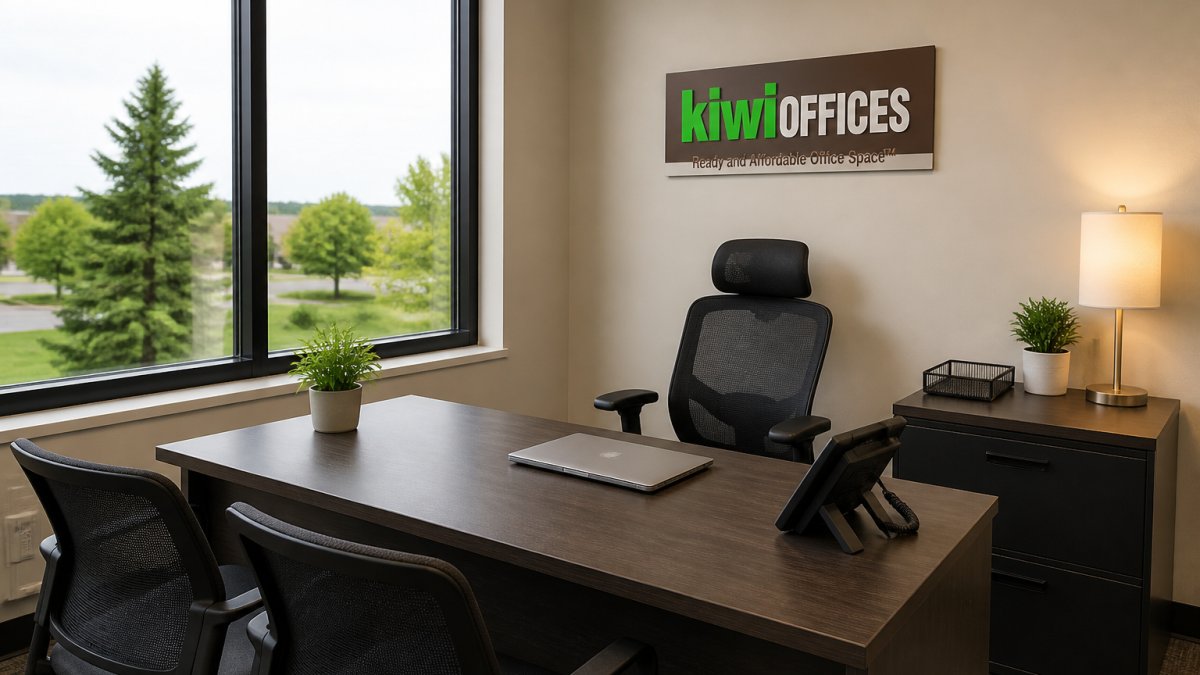
If you answered yes to any of these, a private office beats a shared desk. At Kiwi Offices, we provide professional, turnkey furnished office spaces designed specifically for small businesses. You walk in, plug in, and work.
Compare your options before you commit:
| Space Type | Best For | Main Drawback |
|---|---|---|
| Home office | Solo work, no client visits | No privacy, no business address |
| Co-working desk | Freelancers, light calls | Noise, no dedicated space |
| Private suite | Client meetings, small teams | Higher monthly cost |
| Traditional lease | Large teams, long terms | Buildout time, long commitment |
A common mistake is choosing on price alone. The cheapest desk costs you more when you can't take a client call.
Step 3: How to Improve Focus Working in a New Environment
Focus in a new space is not a mindset problem, it is a setup problem. The ranking articles all tell you to "build a routine," but almost none of them tell you what to do with your body, your equipment, or your first three days. That is the part that actually determines whether you can concentrate by Thursday.

-
Monitor height: The top of the screen should sit at or just below eye level. If the office monitor sits too low, stack it on a ream of paper or a riser, do not crane your neck for eight hours.
-
Chair adjustment: Set seat height so your feet rest flat and your knees sit at roughly a 90-degree angle. Most office chairs have a lumbar knob most people never touch; find it on day one.
-
Keyboard and mouse: Keep elbows near 90 degrees and wrists neutral. If your home setup used a wrist rest or a vertical mouse, bring it, small peripherals are the easiest thing to carry over.
-
Lighting: Overhead fluorescents cause more afternoon fatigue than most people realize. A small desk lamp aimed at your work surface reduces glare on the screen.
-
Noise: If the floor is open, a pair of over-ear headphones does more for deep work than any productivity app.
-
Set your start time and stick to it for the first two weeks.
-
Block two deep-work hours each morning before meetings pile up.
-
Keep your desk clear except for what you need that day.
-
Use a door, a sign, or a status indicator to signal "do not disturb."
-
Take short breaks away from your desk, not at it.
-
Day one: Arrive early, walk the floor, locate the restrooms, kitchen, printer, and quiet rooms. Set up your monitor and chair before you open email.
-
Day two: Run your normal deep-work block and note what interrupts you. Write down the three biggest friction points.
-
Day three: Fix those three friction points, a different seat, a headphone rule, a calendar block, before they harden into habits.
Step 4: Set Professional Boundaries and Availability Expectations
Boundaries only work when they are specific. "I'll get back to you soon" is not a boundary, it is a guess your client has to make. The ranking articles all say to "set expectations," but almost none of them give you the actual words. Here are scripts you can copy, plus the negotiation piece most guides skip entirely.
Set these expectations in writing, early:
- Response times: "I answer emails within one business day. For anything urgent, call my cell."
- Meeting hours: "I book client calls between 9 a.m. and 3 p.m. so I can protect focus time in the morning."
- After-hours contact: "I check messages once in the evening. If it can wait until morning, it will get my full attention then."
- Camera etiquette: "Cameras on for client calls and one-on-ones; optional for internal standups."
- Channel rules: "Chat for quick questions, email for anything that needs a paper trail, phone for anything urgent."
Three things make that script work:
- Lead with agreement. You are not fighting the policy; you are optimizing within it.
- Anchor to output, not preference. Tie the request to when you do your best work, not to what you personally enjoy.
- Offer a trial. "Let's try it for 60 days and review" is far easier to say yes to than a permanent exception.
Step 5: Manage Work-Life Balance and Commute Management
A commute can help or hurt your work-life balance. The trick is turning travel time into a buffer, not a drain.
Try these habits:
- Listen to a podcast or audiobook on the drive
- Use the first 10 minutes at your desk to plan the day
- Leave work at work, don't carry it home
- Keep a hard stop time for leaving
Step 6: The Benefits of Private Office Space for Small Teams
Private office space pays off in ways a home setup can't match. The benefits of private office space show up in client trust, team focus, and your own peace of mind.
What you gain:
- A professional address for contracts and listings
- A quiet room for calls and deep work
- Room to grow from one person to a small team
- A door that closes when you need privacy
- A ready space for client meetings
Common Mistakes to Avoid During Your Home Office Transition
- Skipping the address update. Clients and filings need your new location.
- Choosing on price alone. Cheap space that blocks client calls costs you work.
- Ignoring the lease terms. Ask about cancellation before you sign.
- Packing too much. A furnished suite means you don't need your old desk.
- Rushing the first week. Give yourself time to settle into a routine.
The U.S. Small Business Administration guide to business locations recommends matching your lease length to your growth plans. Short commitments suit new teams.
Frequently Asked Questions
What should I do when returning to the office after working from home?
Start by packing a transition kit: laptop, chargers, headset, and any files you need for the first week. Set up your new workspace before your first day so you can walk in and start working. Review your calendar and block focus time. Communicate your new availability to clients and your team. Expect a two-week adjustment period where your home office transition feels awkward. Plan short breaks and stay hydrated. The goal is to make the first week predictable so you build momentum quickly.
How can I maintain work-life balance when transitioning to a professional office?
Keep your start and end times fixed. When you leave the office, leave work behind. Use your commute as a buffer: listen to a podcast, call family, or plan your evening. At home, create a clear boundary between your work bag and personal space. If you used to work late at home, replace that habit with a walk or a hobby. For remote veterans, this structure prevents burnout and helps you enjoy your personal time more fully.
How do I manage the logistics of moving my business out of the house?
Create a checklist: forward mail, update your business address with the state and clients, pack office supplies in labeled boxes, and schedule a move day. Separate what stays home from what goes to the office. For a private suite, confirm what furniture is included so you don't move duplicates. Notify your team and clients of the new address two weeks ahead. Test your internet and phone setup before your first client meeting. A written checklist reduces stress and prevents missed steps.
What are the benefits of moving from a home office to a private suite?
A private suite gives you a professional address, a quiet space for client meetings, and a clear separation between work and home. You avoid co-working distractions and get a dedicated desk you can leave set up. For small teams, private offices allow collaboration without shared-space noise. The benefits of private office space include improved focus, better client impressions, and a physical boundary that supports work-life balance. You also gain flexibility to expand without moving if your team grows.
The move from a home office to a professional space takes planning, but it's worth the effort. If you're ready to leave the spare bedroom behind, Kiwi Offices offers turnkey furnished suites built for small businesses. You get a private, ready-to-use workspace with your own door and a professional address. Book a tour with Kiwi Offices and see how fast you can get operational.